
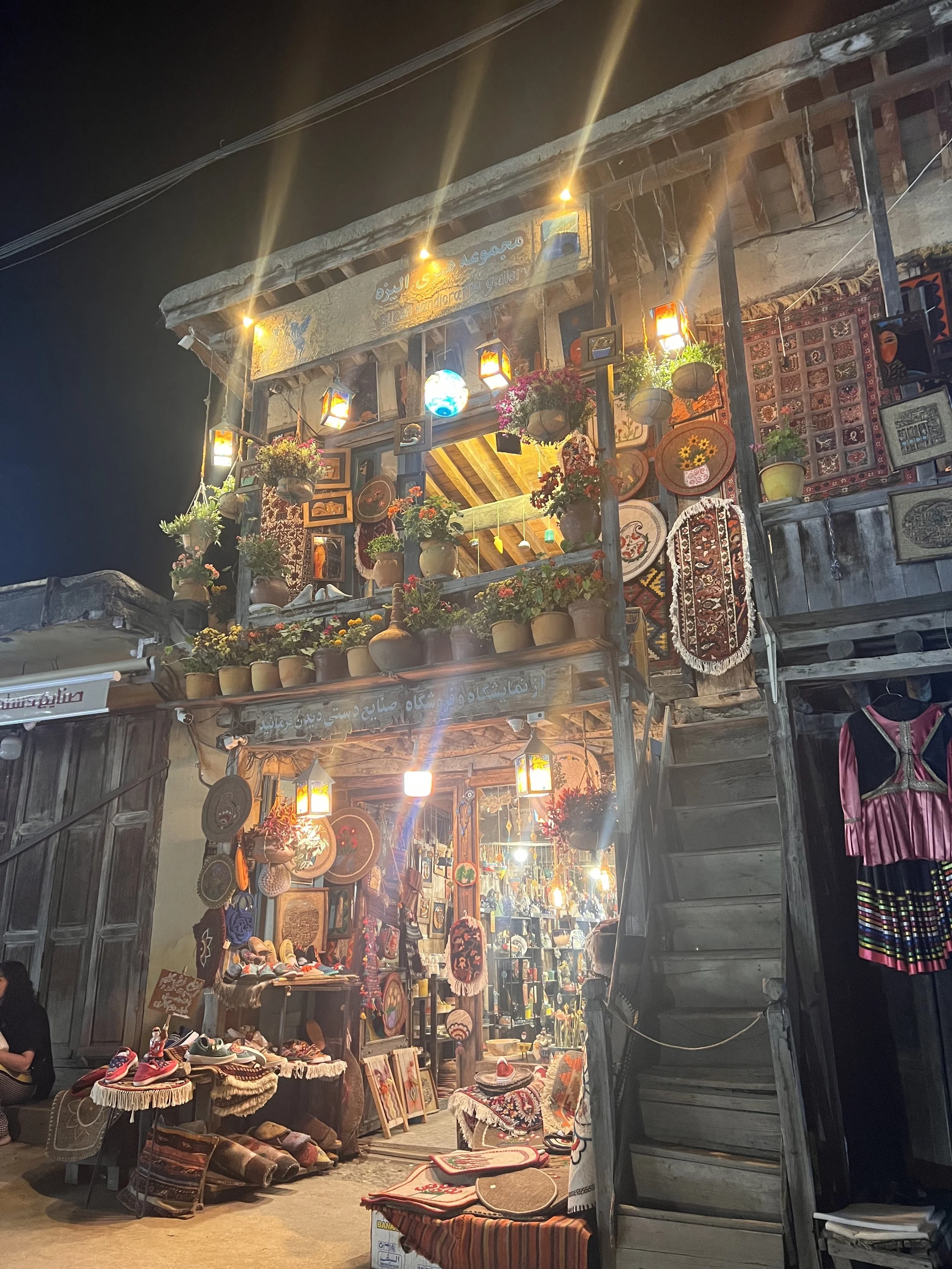
The Magic of Therapy
In your one, precious life, don’t be a muggle. Find the magic. Use it to achieve wonderful things for yourself and others.
Another week, another Friday passes. Today, I am going to discuss the magical (yes, magical) nature of therapy and the work that we do in that room. I often compare therapy and the power of words with the power of magic, and I shall endeavour to expound the reasons for my firm belief in this magic.
Firstly, let us understand magic. It is a transformative and influential power that has the ability to change, alter or completely shift an aspect of this plane of existence. For example, if I speak the words, “Haji Maji Low Taradji” and wave my hands thus, this pair of gloves will disappear! Et voila! They have disappeared. How marvellous. Now, I do not mistake magic with sleight of hand or illusion, that is a false kind of magic, which gives the impression of the change, without actually accomplishing the change honestly. True magic is actually, genuinely, making the gloves disappear.
Now think of words. Think of the creative and destructive power that our words have. Tell someone “I have always loved you, you shine like a star in the darkest of nights and you are the soothing balm to my aching heart. The world is brighter with you in it, and in my prayers of gratitude, your name is often present and frequently mentioned”. What do you think will happen to the internal state of that person? May their heart glow warmly? May a smile rest upon their lips? May they stand a little taller and feel a little brighter in their visage? In their life, they may carry the power of that statement and in darker moments, think back to your words and hold them as a lifeline of hope and light amidst the despair. You have given them strength, confidence, resilience, power and trust. And these qualities, my dear readers, are absolutely priceless and unspeakably powerful.
You, with just a few heartfelt words, have made magic. True, genuine magic. A change has occurred in this world, this plane of existence, because of the energy, authenticity and genuineness you have imbued your words with. You have touched someone’s heart, and helped them to feel more alive, more real, more worthy. Had you said those words with no true passion or feeling, not meaning any of the words, but saying them because they sound pretty, ahhhh well that is illusion and sleight of hand. The change in the other’s heart will not occur, or if it does, it is not be long-lasting, because your actions do not corroborate the words you say.
Intention matters when it comes to magic, for coherence and consistency help the power of the magic to be sustained, and to even grow over time.
Now, take the destructive nature of words. “You will never be able to do it, I told you, you were a failure and absolutely pathetic. Why do you even bother trying? The world would be better without you in it, you are just a waste of space and oxygen”. It hurt my heart a little to even type those words out, that is how dangerous and powerful statements like the one above can be. What would happen to the heart and soul of the person receiving those words? Would they go for that new job? Open their heart to that new relationship? How would they carry themselves day to day? How would they interact with the world around them?
If someone has received enough of the positive power of words, they can withstand such attacks. This is the magic in action, think of a protective forcefield that repels the negative energy away (I love to imagine the scene in Harry Potter and the Prisoner of Azkaban, where Harry thinks of the happiest moment of his life and yells out EXPECTO PATRONUM - and a protective animal of light bursts from his wand to repel the haunting dementors who come to feast on your misery). These individuals have a healthy reservoir of confidence, self esteem and self compassion to enable them to repel these damaging words, saying to them “Leave from my threshold, you will not enter my home. You are not welcome here. Only light, hope, goodness, patience, kindness and honesty are welcome here. Take your evil, destructive nature and leave at once! I already have tenants here who are very pleasant to me”.
Magic awaits us in the most ordinary of places.
What kind of magician will you be?
An agent of darkness or a guardian of light?
In the therapy room, think of me as your magic tutor. I teach you how to phrase the right words, string together the right magical enchantment, apply the right rituals, to bring about the change that you are seeking to implement in your life.
Tala, I wish to learn to start going for a run every morning. Amazing! Here are the words and rituals you need to practice every day to be able to access the right kind of magical power, finding energy, the will to change and inner strength to get up and go for that run.
You might chuckle to yourself and say, okay but that is just silly. Going for a run has nothing to do with magic, you just need to stop being lazy and want it bad enough. Okay, but you try going for a run when your inner voice is saying “What’s the point? It is so cold and dark outside, and who even cares? You’re never going to be able to run for more than 5 minutes. And I am just going to get old and can’t run anymore, so I will have to stop eventually. If I just stay in my warm, comfy bed, who is that hurting? Isn’t five more minutes of sleep better than a stupid 20 minute run, anyways?
If you can still get up and run with that dialogue going in your mind, then all the power to you! That’s wonderful. I know I cannot.
The best way to use magic in your life is to follow these very clear steps:
Identify your goal clearly. Envision it in your mind in as much detail as you can possibly muster (visualisation helps with the magical connection).
Find the words that get you as possibly close to your goal as you can get.
Repeat those words over and over until you start to see the effects of your magical enchantment and feel yourself getting closer to your goal.
Find any ritualistic behaviours you can do that support and enhance the magical charm of your words.
Repeat the words and the rituals over and over until you have accomplished your goal.
This is the magical recipe to life.
Let’s see this in action.
I want to learn how to play the Oud. I see myself playing it, I see myself holding the instrument, strumming the strings, making the melody. I feel the weight of it in my lap, smell the richness of the timber, the smoothness of its bowl, the tautness of the strings. It is there, with me, and I am making music.
“I can do it. I just need to practice and start small, just learning one new chord a day, in one year, I would have learned 365 chords (if that many exist). Yes, it will hurt and be tedious and I might get bored and frustrated, but making music is important to me. My soul needs a new language to express itself and think of how emotionally meaningfully it would be, to be able to make music. You deserve to learn this skill and your life deserves to have more beauty in it. You are allowed to prioritise your pleasure, your joy and you artful, creative self expression. I believe in you, you can do it! Let’s look into it today, nothing is stopping me. I can start right now. I will be grateful I started now rather than later. Let’s go!”
I can purchase the instrument and start practising every day. If I just pick it up and run a few exercises, that is better than nothing.
Repeat until I have achieved the goal and can play the Oud.
“There are only two ways to live your life.
One is as though nothing is a miracle.
The other is as though everything is a miracle”
- Albert Einstein
Therapeutic Skill of the Week
Let us practice the magic of positive affirmations.
Repeat this 10 times out loud, and notice the magic effects of what happens in your body and to your mind.
I have the power to create a life that feels alive.
One small change now leads to big change later.
I am ready to grow beyond what once held me back.
Life is calling me forward, and I am ready to answer.
I choose movement over fear, and possibility over doubt.
Make your own!
Notice the effects of the words on your body, on the state of your mind, and feel the magical effects of this repeated enchantment on your life.
Poetic Reflections
"Call a boy a gentlemen and watch his shoulders straighten.Call a girl a lady and watch her spirit turn graceful.
Humanity was brought into existence by God speaking words into the void of the universe.
We tend to become what we are called.”
- The Medicine of Hope
Why not make life magical? Find the magic in your life, it is all around you, waiting to be witnessed.
In your one precious life, don’t be a muggle.
With patience, hope and kindness,
Tala Mansour.
The Allure of Nihilism
The allure of nihilism. Let us explore why this philosophical belief system holds importance to individuals struggling with loss, pain or a lack of direction in life. Why does the promise that life holds no meaning, mean something to those who have been hurt? I cannot say I have an answer, just thoughts I send out to the ether, questions more than statements.
Happy Friyay everybody! I hope this week has been pleasant and enjoyable thus far. Get outside, enjoy the sunshine. I know I will be after finishing this post.
I wanted to explore nihilism today, because it is a symptomatic profile that I am seeing more and more these days, and I cannot help but wonder aloud, why now? And why, amidst the hopelessness and heaviness of a situation, would a belief system like nihilism have any appeal or function at all?
Nihilism represents a group of philosophical positions that deny the existence of some commonly accepted aspect of reality, such as meaning, value, knowledge, or moral truth.
The main forms include:
Existential nihilism: Life has no inherent or objective meaning, purpose, or value.
Moral nihilism: There are no objective moral facts; nothing is inherently right or wrong.
Epistemological nihilism: Knowledge is impossible or extremely limited.
Political nihilism: The rejection of existing political and social institutions.
I was discussing the two sides to nihilism. Optimism and Despair.
The belief that life has no inherent meaning, purpose or value can be incredibly liberating, allowing you to pursue a more free, authentic life. It can also be debilitating, placing you into an inescapable spiral of existential dread, loss and hopelessness.

Humans are meaning making machines.
Whether we like it or not, our entire existence is focused singularly on creating meaningful experiences. This is a direct challenge to the philosophy of nihilism, which states that objective meaning or value does not exist. But what is meaning anyways?
Our entire nervous system is organised around meaningful interpretations of a random set of signals (temperature, pressure, light, sound, taste, pain), all communicated via electrical and chemical impulses that make their way to the brain. Within the brain, these inputs are transformed into a meaningful experience - the sweetness, coldness and delight of the chocolate ice cream we are currently eating. The loss and ache for the friend we stopped talking to, seeing images of our time together, pulled from our memory.
I recall in this moment reading a research paper or reflective essay that discussed the double edged sword of a neurodegenerative disease like Dementia, where all the memories that gave life meaning slip away, but also you now have access to a level of present-minded awareness, connection and engagement with life, when unburdened by old memories, grievances and the weight of emotional baggage. This idea explores the complex nature of meaning making, and how memory is integral to that, and how the loss of meaning does not necessarily mean despair, loss and existential agony.
So why, in my therapy room, am I seeing more and more clients presenting with what I would identify as existential nihilism (life has no inherent or objective meaning, purpose, or value), when events accumulate in their lives with profound loss, grief, helplessness or psychic pain? For example, a client who was broken up with, lost their job and had a friend pass away in the span of a few months, now presenting with the following statements;
“What’s the point to life, when the world is run by evil billionaires who don’t care whether we live or die”
“Why bother trying to find a new job, I’ll just lose it again”
“Why should I work so hard anyways, I’m just going to die and there is no point”
Confronted with these despairing questions, I cannot help but think back to a story I read in Secrets of Divine Love, by A. Helwa.
The story goes like this:
An elderly man is walking along a beach after a violent storm. Thousands of starfish have been washed ashore and, as the sun rises, they will dry out and die. He notices a young boy picking up the stranded starfish one by one and throwing them back into the sea.
The old man says something to the effect of:
"There are probably a hundred thousand starfish on this beach. What you're doing can't possibly make any difference."
The boy quietly picks up another starfish, gently throws it back into the ocean, and replies:
"It sure made a difference to that one."
This story deeply touched my heart and resonated with something that many spiritual belief systems assert. That good inherently has value, and whether you see the immediate effects of it or not, our souls benefit from altruistic, kind action over nihilistic apathy and despair.
"Whoever does an atom's weight of good shall see it." (Qur'an 99:7)
"Let us not grow weary in doing good, for at the proper time we will reap a harvest if we do not give up." (Galatians 6:9)
"Do not think lightly of good, saying, 'It will not come to me.' Drop by drop is the water pot filled. Likewise, the wise person, gathering it little by little, fills themselves with good." (Dhammapada 122)
“We seldom admit the seductive comfort of hopelessness. It saves us from ambiguity. It has an answer for every question: “There’s just no point.” Hope, on the other hand, is messy. If it might all work out, then we have things to do. We must weather the possibility of happiness.”
- unknown
I do not have all the answers to life’s big questions, I cannot definitively tell you why trying hard and persisting despite painful, overwhelming circumstances is good or better for you, other than listening to the rhythmic pulse of my conscience and evaluating the obvious consequences of action using my logical mind. There is such a thing as optimistic nihilism, which states that even though there is no objective truth or meaning to life, we are then free to create our own meaning and engage in a subjective construct of reality that aligns with our mind, heart and soul’s peace.
And if we sit back and evaluate the (objective) benefits of pursuing a meaningful relationship after a breakup, being kind to a lonely child and making them smile, finding a new job after being made redundant, or offering your umbrella to the elderly woman braving the rain, it is evident to anyone with a rational mind - you benefit from continuing to try, even if you do not believe in the meaning or purpose of your actions. You benefit from the money of your job. You benefit from the companionship of a relationship (for we are all social creatures). And in the grand mystery of life, our hearts find peace, joy and contentment in the helpful support of our fellow humans. The smile of a child, hugging a dear friend, the gentle tears welling in the eyes of someone touched by your kindness, well that is just the most precious thing I can imagine experiencing. And I have not yet met a nihilist who disagrees.
Overt Nihilist. Covert Humanist? You decide.
Therapeutic Skill of the Week
JOURNALING! The King of all meaning-making exercises. Yes I hear you all moaning and groaning. Pleaaaase stop avoiding journaling. It is so, so good for you!
If you have been struggling with the meaning of your existence recently, failing to find value in the autopilot actions of boring, everyday life, try asking yourself these questions:
If there were no external expectations, achievements, or obligations, what experiences, relationships, or pursuits would still feel worth waking up for? Why?
Think about a moment in your life that felt deeply meaningful or alive. What made that moment significant, and what does it reveal about what you truly value?
If you were told you had one year left to live, what would become more important to you? What would become less important? What does this suggest about the kind of life you want to live now?
What values do you consistently admire in other people (e.g., courage, compassion, wisdom, justice, faithfulness, curiosity)? Which of these do you most want your own life to embody?
What suffering, injustice, or need in the world moves you most deeply? What might your emotional response reveal about your purpose or calling?
If your life were reduced to a single sentence that described the impact you had on others, what would you hope that sentence would say? What choices today would move you closer to living that story?
When you strip away your roles, accomplishments, possessions, and other people's opinions, who are you? What truths about yourself remain?
What do you believe is ultimately true about life, humanity, or existence? How does that belief influence the way you choose to live, love, and make decisions each day?
Meaning cannot be cultivated all at once, but rather is collected and built up over years of experiences, relationships, memories, life transitions and moments that hold truth, value, purpose or deep, personal growth.
What is one small action you can take this week that would bring your life into closer alignment with what matters most to you?
Poetic Reflections
"Life is never made unbearable by circumstances,but only by lack of meaning and purpose."
- Viktor Frankl, Man’s Search For Meaning
Look at me ma! I learned how to write less, yippee! I’m honestly getting so proud of my ability to titrate these entries into (hopefully) shorter and more digestible reflections. I truly hope you enjoyed this one.
With love, warmth and care,
Tala Mansour.
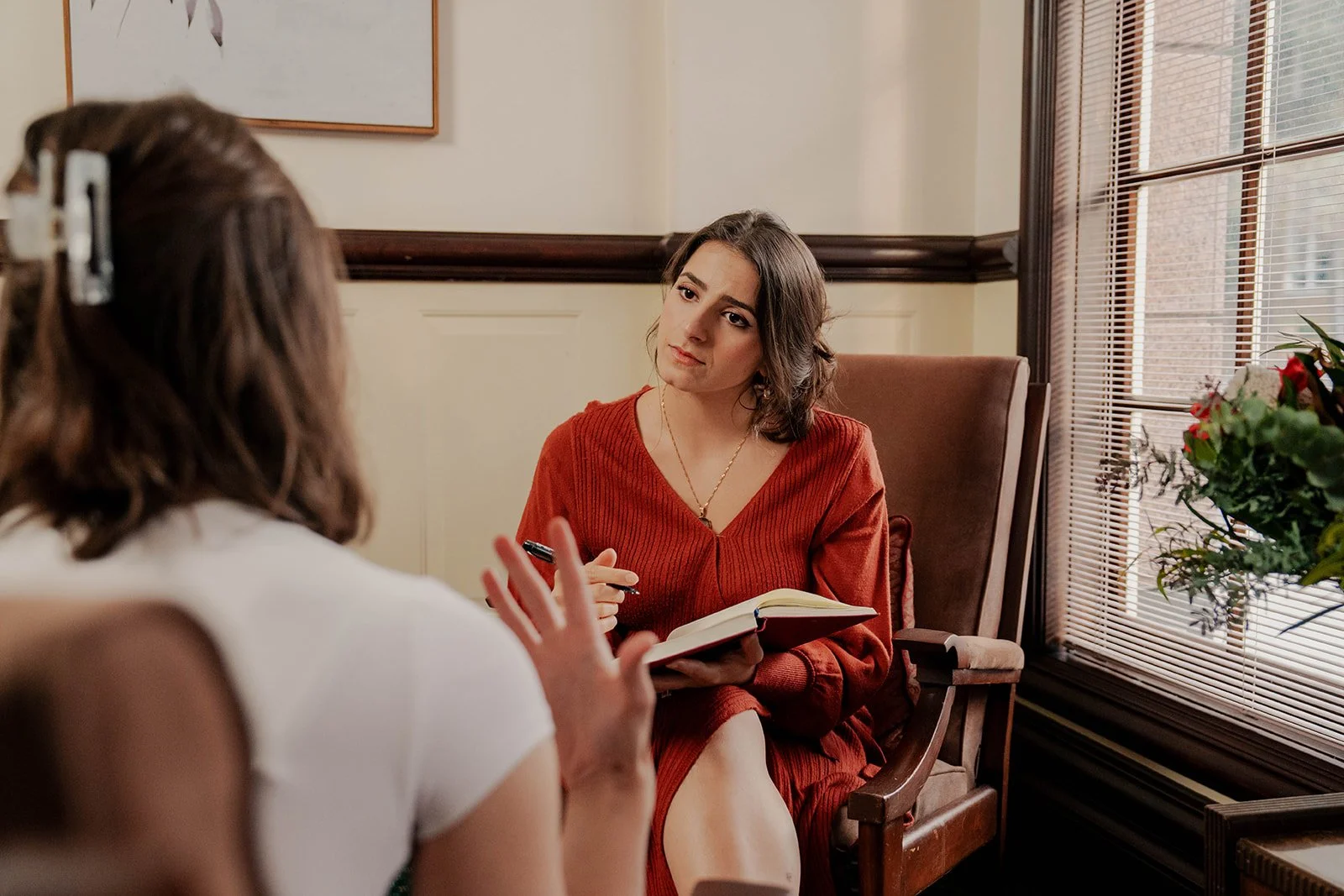
Depression. What is your body actually telling you?
What if we have been misunderstanding depression all along? What if it is our body’s most protective and ancient defense mechanism against pursuing a life that does not align with your soul’s truest desires?
Happy Friday everyone! Today is going to be a purely reflective piece, and I hope to make it somewhat shorter. A tall order for me, I know. God bless the tangent.
Depression is a very well known condition, which modern science and psychology evidence has suggested is a dopaminergic issue. Your brain is struggling to generate enough dopamine - the neurotransmitter of pleasure, motivation and inner drive. Hence why we feel so listless, tired, unmotivated and down when we are experiencing a depressive episode.
Thus, the current treatment recommendation for depression is a cognitive behavioural approach of something called Behavioural Activation. Schedule in tasks of either pleasure or mastery in order to boost your dopamine levels, thereby dealing with the root cause of the depressive symptoms and abra cadabra - you are feeling happy, energised and motivated once more! And yes, this is the case, for endogenous forms of depression. But what about exogenous depression, the depression that is a direct consequence of circumstances, stressors and life-changing events? To read more about the difference between those forms of depression, see the link here (https://www.verywellmind.com/what-is-endogenous-depression-1067283).
Certainly, we cannot ‘pickle ball’ or ‘craft’ our way out of grief, a feeling of suffocation from debt, or confusion on how to proceed in your career. We cannot productively proceed when our systems are misaligned with our reality. What if depression is actually protecting us, rather than punishing us?
I think we have made a fatal error in our interpretation of depression, and I think it is an invisible consequence of seeing the world and our experiences through the biased lens of capitalism and individualism. When we stop functioning in a way that suits the system of productivity, measurable outcomes, progress and optimisation (shudders), then surely we must be the problem, not the system? Right?
This biased perspective might sound like:
“If I can no longer produce, work, socialise, then I am deficient, broken, and unworthy. Something is wrong with me, I need to fix my depression to better fit the world. No-one else seems to be suffering like I am, so I must be the problem”
What if we have been misunderstanding depression all along? What if it is our body’s most protective and ancient defence mechanism against pursuing a life that does not align with your soul’s truest desires?

I have come to believe, over my many years of practice, that depression is incredibly wise and protective, stopping you from proceeding in a life that you are deeply unhappy and dissatisfied with.
For my visual folk out there, I see depression as a weathered and wise old grandmother that gently approaches you in the night, as you burn the midnight oil, frantically working yourself into the ground. She wraps a warm blanket over your shoulders, gently blows out the light and guides you to bed, reminding you of your exhaustion and your need for rest.
“But I have to finish this or everyone will be disappointed in me!” You shriek, unable to shake off the adrenaline of stress, still coursing through your veins.
Then let them be disappointed, she answers. Completely un-phased by your grand ventures, goals or desires. You are tired. You need rest. And how do you even know the path you so desperately tread is leading you to the destination you desire?
You stop, not because you want to, but because you have to. You realise you cannot continue, and the exhaustion washes over you. Motivation flees. Pleasure eludes you. The whole world stops around you, like someone pressed the big red button that says Do Not Push.
We have been fooled into believing that a life of comfort and pleasure is the very best thing for us. We mistake anhedonia - the psychological symptom of losing pleasure or interest in things you normally enjoy - as a horrible symptom that must immediately be corrected. Throw behavioural activation at it! Bring more pleasure and mastery into your life, more dopamine, more comfort, more enjoyment! In reality, that just worsens the depression. What if anhedonia is actually the solution being subtly communicated to you through your body.
Not more pleasure, less please.
“Modern humans are in a "comfort crisis" - an evolutionary mismatch where the elimination of physical friction and hardship has left us physically and mentally ill. Because our brains are wired for survival in a harsh, scarce world, engineered comfort creates a void that fuels anxiety, depression, and a loss of purpose.”
The Comfort Crisis - Michael Easter (https://www.teesche.com/bookshelf/michael_easter_the_comfort_crisis)
Following this intuitive wisdom, I have been prescribing dopamine fasts to my clients who present with treatment-resistant depression and the results are staggering! They report an almost immediate resolution of depressive symptoms, greater clarity, focus and a sense of inner peace returns.
Here is my radical take - Depression is not the disease or the disorder, it is the antidote to an overly manufactured, highly structured, restrictive life that divorces us from the undeniable reality that we live in a wild, beautiful, untamed world that demands alignment, presence, and gratitude from us. We don’t need to experience more, possess more or accomplish more. Sometimes, we need to slow down, take stock of what we have and plan for the journey ahead, to ensure that both the path we tread and the destination we are moving towards, are aligned with our deepest selves, honours the intuitive spirit of our souls and respects our values in life.
Therapeutic Skill of the Week
I challenge you to conduct the dopamine fast experiment that I give to my clients. For just 1-3 weeks, try the following:
No music, podcasts or auditory stimulation while you complete a task, like driving, walking, cooking or cleaning. Just listen to the sounds of the task itself, hear the world around you unfiltered.
Limit fast food, high fats and high sugary food intake as much as possible. Get that cheap dopamine out of here! Opt for whole foods instead, like healthy fats, high protein, fruits, leafy greens and legumes.
No screen time at all. Yep. AT ALL! No social media, delete all the apps. No TV series, no movies, no documentaries, no true crime. Instead, you can read a book, or listen to a podcast (and not while you are doing something else, just listen to the podcast).
If you drink alcohol, use cannabis or smoke nicotine, significantly reduce, if not stop the usage completely.
If there is anything else you secretly do that gives you a big rush of dopamine without you earning it, stop doing that thing.
Here is a list of slow dopamine exercises you can do instead:
Exercise
Walking
Reading
Meditating
Mindfulness
Yoga
Socialising with friends and loved ones
Writing
Journaling
Tidying up
Cooking
Completing a little goal or chore
Listen to nature sounds (I will go as far as allowing emotive, instrumental tracks)
Laying in the sunshine
Swimming
Visiting a new place
Poetic Reflections
“Water wouldn't sound so melodious if there were no rocks in its way.
It's the resistance that gives it rhythm,
the obstacles that give it a voice.
A river flowing without interruption would be silent, almost unnoticed.
Just like that, ease rarely creates depth.
It's the friction that shapes movement into something meaningful.
The wind becomes music only when it passes through leaves.
A flame dances brighter when it meets the dark.Stars are only visible because of the night that surrounds them.
Even a heartbeat is felt because of its steady rise and fall.
What challenges you is often what defines your presence.
Because without something to move through, even the strongest force goes unheard.”
- Unknown
Thank you for reading.
All my very best,
Tala