

The Magic of Therapy
In your one, precious life, don’t be a muggle. Find the magic. Use it to achieve wonderful things for yourself and others.
Another week, another Friday passes. Today, I am going to discuss the magical (yes, magical) nature of therapy and the work that we do in that room. I often compare therapy and the power of words with the power of magic, and I shall endeavour to expound the reasons for my firm belief in this magic.
Firstly, let us understand magic. It is a transformative and influential power that has the ability to change, alter or completely shift an aspect of this plane of existence. For example, if I speak the words, “Haji Maji Low Taradji” and wave my hands thus, this pair of gloves will disappear! Et voila! They have disappeared. How marvellous. Now, I do not mistake magic with sleight of hand or illusion, that is a false kind of magic, which gives the impression of the change, without actually accomplishing the change honestly. True magic is actually, genuinely, making the gloves disappear.
Now think of words. Think of the creative and destructive power that our words have. Tell someone “I have always loved you, you shine like a star in the darkest of nights and you are the soothing balm to my aching heart. The world is brighter with you in it, and in my prayers of gratitude, your name is often present and frequently mentioned”. What do you think will happen to the internal state of that person? May their heart glow warmly? May a smile rest upon their lips? May they stand a little taller and feel a little brighter in their visage? In their life, they may carry the power of that statement and in darker moments, think back to your words and hold them as a lifeline of hope and light amidst the despair. You have given them strength, confidence, resilience, power and trust. And these qualities, my dear readers, are absolutely priceless and unspeakably powerful.
You, with just a few heartfelt words, have made magic. True, genuine magic. A change has occurred in this world, this plane of existence, because of the energy, authenticity and genuineness you have imbued your words with. You have touched someone’s heart, and helped them to feel more alive, more real, more worthy. Had you said those words with no true passion or feeling, not meaning any of the words, but saying them because they sound pretty, ahhhh well that is illusion and sleight of hand. The change in the other’s heart will not occur, or if it does, it is not be long-lasting, because your actions do not corroborate the words you say.
Intention matters when it comes to magic, for coherence and consistency help the power of the magic to be sustained, and to even grow over time.
Now, take the destructive nature of words. “You will never be able to do it, I told you, you were a failure and absolutely pathetic. Why do you even bother trying? The world would be better without you in it, you are just a waste of space and oxygen”. It hurt my heart a little to even type those words out, that is how dangerous and powerful statements like the one above can be. What would happen to the heart and soul of the person receiving those words? Would they go for that new job? Open their heart to that new relationship? How would they carry themselves day to day? How would they interact with the world around them?
If someone has received enough of the positive power of words, they can withstand such attacks. This is the magic in action, think of a protective forcefield that repels the negative energy away (I love to imagine the scene in Harry Potter and the Prisoner of Azkaban, where Harry thinks of the happiest moment of his life and yells out EXPECTO PATRONUM - and a protective animal of light bursts from his wand to repel the haunting dementors who come to feast on your misery). These individuals have a healthy reservoir of confidence, self esteem and self compassion to enable them to repel these damaging words, saying to them “Leave from my threshold, you will not enter my home. You are not welcome here. Only light, hope, goodness, patience, kindness and honesty are welcome here. Take your evil, destructive nature and leave at once! I already have tenants here who are very pleasant to me”.

Magic awaits us in the most ordinary of places.
What kind of magician will you be?
An agent of darkness or a guardian of light?
In the therapy room, think of me as your magic tutor. I teach you how to phrase the right words, string together the right magical enchantment, apply the right rituals, to bring about the change that you are seeking to implement in your life.
Tala, I wish to learn to start going for a run every morning. Amazing! Here are the words and rituals you need to practice every day to be able to access the right kind of magical power, finding energy, the will to change and inner strength to get up and go for that run.
You might chuckle to yourself and say, okay but that is just silly. Going for a run has nothing to do with magic, you just need to stop being lazy and want it bad enough. Okay, but you try going for a run when your inner voice is saying “What’s the point? It is so cold and dark outside, and who even cares? You’re never going to be able to run for more than 5 minutes. And I am just going to get old and can’t run anymore, so I will have to stop eventually. If I just stay in my warm, comfy bed, who is that hurting? Isn’t five more minutes of sleep better than a stupid 20 minute run, anyways?
If you can still get up and run with that dialogue going in your mind, then all the power to you! That’s wonderful. I know I cannot.
The best way to use magic in your life is to follow these very clear steps:
Identify your goal clearly. Envision it in your mind in as much detail as you can possibly muster (visualisation helps with the magical connection).
Find the words that get you as possibly close to your goal as you can get.
Repeat those words over and over until you start to see the effects of your magical enchantment and feel yourself getting closer to your goal.
Find any ritualistic behaviours you can do that support and enhance the magical charm of your words.
Repeat the words and the rituals over and over until you have accomplished your goal.
This is the magical recipe to life.
Let’s see this in action.
I want to learn how to play the Oud. I see myself playing it, I see myself holding the instrument, strumming the strings, making the melody. I feel the weight of it in my lap, smell the richness of the timber, the smoothness of its bowl, the tautness of the strings. It is there, with me, and I am making music.
“I can do it. I just need to practice and start small, just learning one new chord a day, in one year, I would have learned 365 chords (if that many exist). Yes, it will hurt and be tedious and I might get bored and frustrated, but making music is important to me. My soul needs a new language to express itself and think of how emotionally meaningfully it would be, to be able to make music. You deserve to learn this skill and your life deserves to have more beauty in it. You are allowed to prioritise your pleasure, your joy and you artful, creative self expression. I believe in you, you can do it! Let’s look into it today, nothing is stopping me. I can start right now. I will be grateful I started now rather than later. Let’s go!”
I can purchase the instrument and start practising every day. If I just pick it up and run a few exercises, that is better than nothing.
Repeat until I have achieved the goal and can play the Oud.
“There are only two ways to live your life.
One is as though nothing is a miracle.
The other is as though everything is a miracle”
- Albert Einstein
Therapeutic Skill of the Week
Let us practice the magic of positive affirmations.
Repeat this 10 times out loud, and notice the magic effects of what happens in your body and to your mind.
I have the power to create a life that feels alive.
One small change now leads to big change later.
I am ready to grow beyond what once held me back.
Life is calling me forward, and I am ready to answer.
I choose movement over fear, and possibility over doubt.
Make your own!
Notice the effects of the words on your body, on the state of your mind, and feel the magical effects of this repeated enchantment on your life.
Poetic Reflections
"Call a boy a gentlemen and watch his shoulders straighten.Call a girl a lady and watch her spirit turn graceful.
Humanity was brought into existence by God speaking words into the void of the universe.
We tend to become what we are called.”
- The Medicine of Hope
Why not make life magical? Find the magic in your life, it is all around you, waiting to be witnessed.
In your one precious life, don’t be a muggle.
With patience, hope and kindness,
Tala Mansour.

The Allure of Nihilism
The allure of nihilism. Let us explore why this philosophical belief system holds importance to individuals struggling with loss, pain or a lack of direction in life. Why does the promise that life holds no meaning, mean something to those who have been hurt? I cannot say I have an answer, just thoughts I send out to the ether, questions more than statements.
Happy Friyay everybody! I hope this week has been pleasant and enjoyable thus far. Get outside, enjoy the sunshine. I know I will be after finishing this post.
I wanted to explore nihilism today, because it is a symptomatic profile that I am seeing more and more these days, and I cannot help but wonder aloud, why now? And why, amidst the hopelessness and heaviness of a situation, would a belief system like nihilism have any appeal or function at all?
Nihilism represents a group of philosophical positions that deny the existence of some commonly accepted aspect of reality, such as meaning, value, knowledge, or moral truth.
The main forms include:
Existential nihilism: Life has no inherent or objective meaning, purpose, or value.
Moral nihilism: There are no objective moral facts; nothing is inherently right or wrong.
Epistemological nihilism: Knowledge is impossible or extremely limited.
Political nihilism: The rejection of existing political and social institutions.
I was discussing the two sides to nihilism. Optimism and Despair.
The belief that life has no inherent meaning, purpose or value can be incredibly liberating, allowing you to pursue a more free, authentic life. It can also be debilitating, placing you into an inescapable spiral of existential dread, loss and hopelessness.
Humans are meaning making machines.
Whether we like it or not, our entire existence is focused singularly on creating meaningful experiences. This is a direct challenge to the philosophy of nihilism, which states that objective meaning or value does not exist. But what is meaning anyways?
Our entire nervous system is organised around meaningful interpretations of a random set of signals (temperature, pressure, light, sound, taste, pain), all communicated via electrical and chemical impulses that make their way to the brain. Within the brain, these inputs are transformed into a meaningful experience - the sweetness, coldness and delight of the chocolate ice cream we are currently eating. The loss and ache for the friend we stopped talking to, seeing images of our time together, pulled from our memory.
I recall in this moment reading a research paper or reflective essay that discussed the double edged sword of a neurodegenerative disease like Dementia, where all the memories that gave life meaning slip away, but also you now have access to a level of present-minded awareness, connection and engagement with life, when unburdened by old memories, grievances and the weight of emotional baggage. This idea explores the complex nature of meaning making, and how memory is integral to that, and how the loss of meaning does not necessarily mean despair, loss and existential agony.
So why, in my therapy room, am I seeing more and more clients presenting with what I would identify as existential nihilism (life has no inherent or objective meaning, purpose, or value), when events accumulate in their lives with profound loss, grief, helplessness or psychic pain? For example, a client who was broken up with, lost their job and had a friend pass away in the span of a few months, now presenting with the following statements;
“What’s the point to life, when the world is run by evil billionaires who don’t care whether we live or die”
“Why bother trying to find a new job, I’ll just lose it again”
“Why should I work so hard anyways, I’m just going to die and there is no point”
Confronted with these despairing questions, I cannot help but think back to a story I read in Secrets of Divine Love, by A. Helwa.
The story goes like this:
An elderly man is walking along a beach after a violent storm. Thousands of starfish have been washed ashore and, as the sun rises, they will dry out and die. He notices a young boy picking up the stranded starfish one by one and throwing them back into the sea.
The old man says something to the effect of:
"There are probably a hundred thousand starfish on this beach. What you're doing can't possibly make any difference."
The boy quietly picks up another starfish, gently throws it back into the ocean, and replies:
"It sure made a difference to that one."
This story deeply touched my heart and resonated with something that many spiritual belief systems assert. That good inherently has value, and whether you see the immediate effects of it or not, our souls benefit from altruistic, kind action over nihilistic apathy and despair.
"Whoever does an atom's weight of good shall see it." (Qur'an 99:7)
"Let us not grow weary in doing good, for at the proper time we will reap a harvest if we do not give up." (Galatians 6:9)
"Do not think lightly of good, saying, 'It will not come to me.' Drop by drop is the water pot filled. Likewise, the wise person, gathering it little by little, fills themselves with good." (Dhammapada 122)
“We seldom admit the seductive comfort of hopelessness. It saves us from ambiguity. It has an answer for every question: “There’s just no point.” Hope, on the other hand, is messy. If it might all work out, then we have things to do. We must weather the possibility of happiness.”
- unknown
I do not have all the answers to life’s big questions, I cannot definitively tell you why trying hard and persisting despite painful, overwhelming circumstances is good or better for you, other than listening to the rhythmic pulse of my conscience and evaluating the obvious consequences of action using my logical mind. There is such a thing as optimistic nihilism, which states that even though there is no objective truth or meaning to life, we are then free to create our own meaning and engage in a subjective construct of reality that aligns with our mind, heart and soul’s peace.
And if we sit back and evaluate the (objective) benefits of pursuing a meaningful relationship after a breakup, being kind to a lonely child and making them smile, finding a new job after being made redundant, or offering your umbrella to the elderly woman braving the rain, it is evident to anyone with a rational mind - you benefit from continuing to try, even if you do not believe in the meaning or purpose of your actions. You benefit from the money of your job. You benefit from the companionship of a relationship (for we are all social creatures). And in the grand mystery of life, our hearts find peace, joy and contentment in the helpful support of our fellow humans. The smile of a child, hugging a dear friend, the gentle tears welling in the eyes of someone touched by your kindness, well that is just the most precious thing I can imagine experiencing. And I have not yet met a nihilist who disagrees.
Overt Nihilist. Covert Humanist? You decide.
Therapeutic Skill of the Week
JOURNALING! The King of all meaning-making exercises. Yes I hear you all moaning and groaning. Pleaaaase stop avoiding journaling. It is so, so good for you!
If you have been struggling with the meaning of your existence recently, failing to find value in the autopilot actions of boring, everyday life, try asking yourself these questions:
If there were no external expectations, achievements, or obligations, what experiences, relationships, or pursuits would still feel worth waking up for? Why?
Think about a moment in your life that felt deeply meaningful or alive. What made that moment significant, and what does it reveal about what you truly value?
If you were told you had one year left to live, what would become more important to you? What would become less important? What does this suggest about the kind of life you want to live now?
What values do you consistently admire in other people (e.g., courage, compassion, wisdom, justice, faithfulness, curiosity)? Which of these do you most want your own life to embody?
What suffering, injustice, or need in the world moves you most deeply? What might your emotional response reveal about your purpose or calling?
If your life were reduced to a single sentence that described the impact you had on others, what would you hope that sentence would say? What choices today would move you closer to living that story?
When you strip away your roles, accomplishments, possessions, and other people's opinions, who are you? What truths about yourself remain?
What do you believe is ultimately true about life, humanity, or existence? How does that belief influence the way you choose to live, love, and make decisions each day?
Meaning cannot be cultivated all at once, but rather is collected and built up over years of experiences, relationships, memories, life transitions and moments that hold truth, value, purpose or deep, personal growth.
What is one small action you can take this week that would bring your life into closer alignment with what matters most to you?
Poetic Reflections
"Life is never made unbearable by circumstances,but only by lack of meaning and purpose."
- Viktor Frankl, Man’s Search For Meaning
Look at me ma! I learned how to write less, yippee! I’m honestly getting so proud of my ability to titrate these entries into (hopefully) shorter and more digestible reflections. I truly hope you enjoyed this one.
With love, warmth and care,
Tala Mansour.

Depression. What is your body actually telling you?
What if we have been misunderstanding depression all along? What if it is our body’s most protective and ancient defense mechanism against pursuing a life that does not align with your soul’s truest desires?
Happy Friday everyone! Today is going to be a purely reflective piece, and I hope to make it somewhat shorter. A tall order for me, I know. God bless the tangent.
Depression is a very well known condition, which modern science and psychology evidence has suggested is a dopaminergic issue. Your brain is struggling to generate enough dopamine - the neurotransmitter of pleasure, motivation and inner drive. Hence why we feel so listless, tired, unmotivated and down when we are experiencing a depressive episode.
Thus, the current treatment recommendation for depression is a cognitive behavioural approach of something called Behavioural Activation. Schedule in tasks of either pleasure or mastery in order to boost your dopamine levels, thereby dealing with the root cause of the depressive symptoms and abra cadabra - you are feeling happy, energised and motivated once more! And yes, this is the case, for endogenous forms of depression. But what about exogenous depression, the depression that is a direct consequence of circumstances, stressors and life-changing events? To read more about the difference between those forms of depression, see the link here (https://www.verywellmind.com/what-is-endogenous-depression-1067283).
Certainly, we cannot ‘pickle ball’ or ‘craft’ our way out of grief, a feeling of suffocation from debt, or confusion on how to proceed in your career. We cannot productively proceed when our systems are misaligned with our reality. What if depression is actually protecting us, rather than punishing us?
I think we have made a fatal error in our interpretation of depression, and I think it is an invisible consequence of seeing the world and our experiences through the biased lens of capitalism and individualism. When we stop functioning in a way that suits the system of productivity, measurable outcomes, progress and optimisation (shudders), then surely we must be the problem, not the system? Right?
This biased perspective might sound like:
“If I can no longer produce, work, socialise, then I am deficient, broken, and unworthy. Something is wrong with me, I need to fix my depression to better fit the world. No-one else seems to be suffering like I am, so I must be the problem”
What if we have been misunderstanding depression all along? What if it is our body’s most protective and ancient defence mechanism against pursuing a life that does not align with your soul’s truest desires?

I have come to believe, over my many years of practice, that depression is incredibly wise and protective, stopping you from proceeding in a life that you are deeply unhappy and dissatisfied with.
For my visual folk out there, I see depression as a weathered and wise old grandmother that gently approaches you in the night, as you burn the midnight oil, frantically working yourself into the ground. She wraps a warm blanket over your shoulders, gently blows out the light and guides you to bed, reminding you of your exhaustion and your need for rest.
“But I have to finish this or everyone will be disappointed in me!” You shriek, unable to shake off the adrenaline of stress, still coursing through your veins.
Then let them be disappointed, she answers. Completely un-phased by your grand ventures, goals or desires. You are tired. You need rest. And how do you even know the path you so desperately tread is leading you to the destination you desire?
You stop, not because you want to, but because you have to. You realise you cannot continue, and the exhaustion washes over you. Motivation flees. Pleasure eludes you. The whole world stops around you, like someone pressed the big red button that says Do Not Push.
We have been fooled into believing that a life of comfort and pleasure is the very best thing for us. We mistake anhedonia - the psychological symptom of losing pleasure or interest in things you normally enjoy - as a horrible symptom that must immediately be corrected. Throw behavioural activation at it! Bring more pleasure and mastery into your life, more dopamine, more comfort, more enjoyment! In reality, that just worsens the depression. What if anhedonia is actually the solution being subtly communicated to you through your body.
Not more pleasure, less please.
“Modern humans are in a "comfort crisis" - an evolutionary mismatch where the elimination of physical friction and hardship has left us physically and mentally ill. Because our brains are wired for survival in a harsh, scarce world, engineered comfort creates a void that fuels anxiety, depression, and a loss of purpose.”
The Comfort Crisis - Michael Easter (https://www.teesche.com/bookshelf/michael_easter_the_comfort_crisis)
Following this intuitive wisdom, I have been prescribing dopamine fasts to my clients who present with treatment-resistant depression and the results are staggering! They report an almost immediate resolution of depressive symptoms, greater clarity, focus and a sense of inner peace returns.
Here is my radical take - Depression is not the disease or the disorder, it is the antidote to an overly manufactured, highly structured, restrictive life that divorces us from the undeniable reality that we live in a wild, beautiful, untamed world that demands alignment, presence, and gratitude from us. We don’t need to experience more, possess more or accomplish more. Sometimes, we need to slow down, take stock of what we have and plan for the journey ahead, to ensure that both the path we tread and the destination we are moving towards, are aligned with our deepest selves, honours the intuitive spirit of our souls and respects our values in life.
Therapeutic Skill of the Week
I challenge you to conduct the dopamine fast experiment that I give to my clients. For just 1-3 weeks, try the following:
No music, podcasts or auditory stimulation while you complete a task, like driving, walking, cooking or cleaning. Just listen to the sounds of the task itself, hear the world around you unfiltered.
Limit fast food, high fats and high sugary food intake as much as possible. Get that cheap dopamine out of here! Opt for whole foods instead, like healthy fats, high protein, fruits, leafy greens and legumes.
No screen time at all. Yep. AT ALL! No social media, delete all the apps. No TV series, no movies, no documentaries, no true crime. Instead, you can read a book, or listen to a podcast (and not while you are doing something else, just listen to the podcast).
If you drink alcohol, use cannabis or smoke nicotine, significantly reduce, if not stop the usage completely.
If there is anything else you secretly do that gives you a big rush of dopamine without you earning it, stop doing that thing.
Here is a list of slow dopamine exercises you can do instead:
Exercise
Walking
Reading
Meditating
Mindfulness
Yoga
Socialising with friends and loved ones
Writing
Journaling
Tidying up
Cooking
Completing a little goal or chore
Listen to nature sounds (I will go as far as allowing emotive, instrumental tracks)
Laying in the sunshine
Swimming
Visiting a new place
Poetic Reflections
“Water wouldn't sound so melodious if there were no rocks in its way.
It's the resistance that gives it rhythm,
the obstacles that give it a voice.
A river flowing without interruption would be silent, almost unnoticed.
Just like that, ease rarely creates depth.
It's the friction that shapes movement into something meaningful.
The wind becomes music only when it passes through leaves.
A flame dances brighter when it meets the dark.Stars are only visible because of the night that surrounds them.
Even a heartbeat is felt because of its steady rise and fall.
What challenges you is often what defines your presence.
Because without something to move through, even the strongest force goes unheard.”
- Unknown
Thank you for reading.
All my very best,
Tala

Boundaries… Breaking Myths and Building Skills
Today we are breaking down the common misconceptions about boundaries, exploring the deeply skilled and nuanced way we can set boundaries in our lives.
On this cold and gloomy Friday morning, I am reflecting on the very controversial topic of boundaries, and how much space it has taken in recent sessions with clients. Some people view boundaries with disgust and vehemence, others with relief and wonder, at how they have never thought to use them before in relationships. Let us break down the true depth of boundaries and challenge some common misconceptions about, what I believe to be, one of the best techniques we can use to navigate difficult relationships.
Boundaries are protective. Full stop. No matter what your experience has been with boundaries thus far, I can assure you, if they have felt uncomfortable or abrasive, it is likely that the other person was unskilled in the application of this intervention. Boundaries are not selfish, they are not indulgent, they are not reactive. Boundaries are considered, measured and require a level of emotional intelligence, nuance and skilled communication to effectively establish. The reason why a boundary exists in a relationship is to protect the relationship. If a boundary means permanently ending the relationship, then it is not a boundary.
Let us elucidate this point with an example. Let us say that I have a dear friend who is very keen to get pregnant, whereas I am not interested in doing so, and actually become agitated by repeated questions or hints about starting a family. She sends multiple videos and photos about babies and how wonderful life is as a mother. Her intentions are pure and loving, however, she is unaware of the emotional strain she is causing me. I find myself drained after interactions, and feel myself withdrawing and wanting to avoid contact with that friend (very common warning signs that your needs, feelings and rights are not being appropriately respected in a relationship dynamic). In order to protect that friendship, I needed to set the boundary that moving forward, it would be appreciated if content around babies and motherhood could be limited and there is room to discuss other topics in the friendship.
This serves to;
Protect the friendship by creating safety in our interactions once more, for me to feel safe continuing to show up.
Acknowledges my needs and emotions as valid and important in the relationship.
Reduces the risk of emotional suppression or self-sacrifice (to keep the peace), which would have resulted in resentment building over time.
Respects the rights of the friend to be able to make an informed choice in the friendship, providing her the opportunity to respond to and meet my needs, rather than me deciding for us that the friendship is over.
Boundaries are a sign of emotional maturity, consideration and depth, as it requires a level of distress tolerance skills (slightly confrontational discussions are never comfortable or easy) and the ability to skilfully communicate your needs, without bulldozing the other person’s experience in the relationship. There are many ways I could have established that boundary. Let us explore some common approaches and unpack their positive and negative consequences, allowing you to evaluate how boundary setting will look for you, depending on your social environment and the capacity of the people around you.
There is not a one-size-fits-all approach to boundary setting, contrary to current popular opinion.

Option 1
“I’ve been feeling really unhappy with the recent focus on babies in our time together, and I feel like you aren’t making space for other things in our friendship. Can we please avoid talking about babies and motherhood for a while, until I let you know I’m ready for that stage of my life?”
Option 2
“I get really uncomfortable with conversations that focus on motherhood and having babies, and I know this is my stuff. I’ve had some recent trauma in that area and I’m trying to work through it, but in the meantime it would be really helpful if you could not bring up that topic, as it is triggering some strong emotions in me and I find myself withdrawing in our friendship. It is absolutely not you, and I need you to know that I love you and appreciate your enthusiasm about motherhood, I just can’t share that joy with you right now, and I’m very sorry about that.”
Option 3
[Friend brings up babies] - “I’m so glad you brought that up again, as I’ve been meaning to ask you if we could switch the focus of our conversations to some other topics, as I’ve noticed a lot of our time chatting has been focusing on motherhood. What else is going on with you? Any hobbies you are interested in pursuing these days?
Option 4
“Can we please not talk about that anymore? It makes me uncomfortable.”
Option 5
-Pause- “I’m not going to respond to you anymore when you bring up motherhood and child-rearing. If you continue to bring it up, I will stop talking to you and walk away. I hope you can understand that this is my boundary.”
Option 6
Say nothing. Do nothing. Just let it be.
And so on and so forth. Interestingly, these are all effective ways to set a boundary. However, there are multiple factors to consider when you decide on the approach you take to setting a boundary. I think most people envision option 5 when they picture setting a boundary with others, though I would argue that option is the most bullish, least skilful way to set a boundary, especially with a trusted, loved one. The factors that I hope you are taking into consideration when you explore setting a boundary with a friend or acquaintance are;
Their age - as this considers their generational understanding of appropriate behaviours in relationships. Setting a boundary with a 21 year old is very different to setting a boundary with a 60 year old.
Their level of emotional intelligence - some individuals have a deeper, more reflective capacity to hold space for your emotions and understanding their impact on you, while others can struggle with empathy and consequential thinking, showing a limited capacity for taking accountability or changing their behaviours to make space for your needs.
The duration and shared history in your relationship - is there established trust, have they shown you that they are reliable, trustworthy, kind and considerate? Do you care deeply for this friendship and wish to not only maintain it, but continue to grow it?
Your felt sense of safety with that person - can you converse with them and still feel safe? Do they let you speak without cutting you off? Do they use emotional manipulation, bullying, intimidation or gaslighting in conversations to avoid discussing their problems?
Cultural and Religious Obligations - we do not live in a vacuum, and there are broader cultural and religious communities that will be impacted by boundary setting in certain relationships, particularly parental ones. Sometimes we need to explore more skilful, nuanced ways of setting boundaries that respect our collectivist communities, while also addressing our individual needs.
Let’s play a little fun game, match the consideration to the option you would use in setting a boundary. E.g. for a culturally sensitive boundary, you could use option 3, or some variation of that. Write out how you would word your boundary.
Aside from these more personal considerations, I would also like you to reflect on whether this issue has actually been a recurring one, or is it just a once-off, fleeting occurrence? You need to track these perceptions with journaling or documentation, as the brain is very wont to warp reality and distort your perception of the frequency and duration of an event, particularly if the interaction is stressful or anxiety-provoking. It is not worth setting a boundary with a loved one if they are not repeating this pattern enough to warrant a conversation. We also need to acknowledge the space for thought challenging, cognitive reframing and personalised emotion regulation and self-soothing in our relationships. This is the space where grace enters a relationship, and you are allowed to let certain things go. Pick your battles wisely.
It is not always about OUR safety and OUR needs in relationships. We need to make room for our friends, colleagues, acquaintances and peers to express their wants, needs, feelings and interests in relationships. Not every encounter that leaves us feeling anxious or drained necessarily means the other has done something inappropriate.
This is a cognitive distortion called emotional reasoning, that claims “Because I feel anxious, they must have done something wrong. I need to set a boundary here”.

The time to set a boundary is when you not setting the boundary will cause the relationship to wither and die.
Boundaries are protective of relationships. Their function is to keep you interacting and engaging with the other, in a way that maintains your sense of safety, autonomy and respect. If we continue to make excuses for the other person, not acknowledging the way that interactions with them actually harm, deplete and disrespect us, not only are we causing harm to ourselves, but we are maintaining a friendship that maybe we should be walking away from. Boundaries are the ultimate test as to whether we keep working on the relationship, or we let it go. If I skilfully communicate my needs, how does the other respond? Do they escalate the behaviour?
The final form of boundary setting is saying nothing. Just letting time run its course and let the relationship slowly fade on its own. When the person on the other side is not responsive or capable of receiving your vulnerability, do not expose yourself to further harm by pouring your heart out to them. This is a good time for us to explore those options I listed above and the times you would use that boundary, and times when you absolutely should not use that boundary!
Therapeutic Skill of the Week
We are going to explore skilful ways of setting a boundary and how to improve your existing approaches to boundary setting.
Option 1
“I’ve been feeling really unhappy with the recent focus on babies in our time together, and I feel like you aren’t making space for other things in our friendship. Can we please avoid talking about babies and motherhood for a while, until I let you know I’m ready for that stage of my life?”
PROS - It is concise, validates your emotional experience, asks for the change in behaviour, lets her know we can go back to discussing the topic when I am ready.
CONS - Vague language used (‘for a while, when I’m ready’), assumes unfairly that the friend is not considering your needs in the relationship, prioritises your experience over your friend’s. This is not a very considerate approach, it is very self-focused.
WAYS TO IMPROVE: Clearly state how long you need to avoid the topic, a few weeks, months? What are you doing to manage your emotions about the issue? Are you working on it? How will you honour your friend’s experience and interests too? Offer to talk about her own experiences alone, requesting gently that she stops asking you about your experience with the topic.
WHO TO USE THIS BOUNDARY WITH: Friends, partners, siblings, trusted individuals, cousins, peers of a similar age, when there is no cultural obligation or religious context to consider.
Option 2
“I get really uncomfortable with conversations that focus on motherhood and having babies, and I know this is my stuff. I’ve had some recent trauma in that area and I’m trying to work through it, but in the meantime it would be really helpful if you could not bring up that topic, as it is triggering some strong emotions in me and I find myself withdrawing in our friendship. It is absolutely not you, and I need you to know that I love you and appreciate your enthusiasm about motherhood, I just can’t share that joy with you right now, and I’m very sorry about that.”
PROS - It provides greater context, considering your friend’s feelings and right to understand exactly why this issue needs to be avoided. It is very empathic and compassionate to your friend’s right to discuss things she is interested in at this time. It takes responsibility and ownership of the discomfort, rather than blaming it on the friend. It clearly outlines what you are doing to work through the issue, and places protecting the friendship as the centre of the discussion, over protecting your own emotions.
CONS - It still does not provide space in the relationship for the other’s needs, there is an element of over-explaining or over-justifying. It is fine line between providing context and trying to appease the other’s emotions by overly explaining how it is not their fault. Sometimes simple is better.
WAYS TO IMPROVE: Be certain around how much you want to explain as to the context of this boundary being set, try to avoid over-explaining yourself. Offer some space for the friend to request space or time for their needs to be met.
WHO TO USE THIS BOUNDARY WITH: Only with very close, loved ones who have established trust and can hear your vulnerability.
Option 3
[Friend brings up babies] - “I’m so glad you brought that up again, as I’ve been meaning to ask you if we could switch the focus of our conversations to some other topics, as I’ve noticed a lot of our time chatting has been focusing on motherhood. What else is going on with you? Any hobbies you are interested in pursuing these days?
PROS - It is concise, simple, protects your vulnerability by not acknowledging how it impacts you emotionally, changes the conversation which is a subtle, nuanced way of setting a boundary, without limiting the person that you can/cannot talk about this topic.
CONS - There is no emotional repair, as the core of the issue is not addressed.
WAYS TO IMPROVE: Make sure to explore the emotional wound on your own, either with journaling, time with a psychologist or with a trusted friend. We cannot pretend the harm does not exist.
WHO TO USE THIS BOUNDARY WITH: More distant relationships, people you do not see very often, elders who cannot be told what to do, or who struggle to understand the concept of a boundary.
Option 4
“Can we please not talk about that anymore? It makes me uncomfortable.”
PROS - Short, sweet, to the point. Addresses both the change in behaviour and the emotional wound.
CONS - Incredibly blunt, unskilful, does not consider the emotions of the other.
WAYS TO IMPROVE: Reflect deeply on whether this is an appropriate boundary to set with the person you intend to use it with. Can the relationship sustain this kind of boundary, or will this be the final blow?
WHO TO USE THIS BOUNDARY WITH: People who themselves utilise and respond to blunt, direct communication. Individuals without a capacity for empathy, emotional depth or vulnerability.
Option 5
-Pause- “I’m not going to respond to you anymore when you bring up motherhood and child-rearing. If you continue to bring it up, I will stop talking to you and walk away. I hope you can understand that this is my boundary.”
PROS - Very assertive and clear communication, outlines the consequence to the boundary breach very overtly, outlines this is a boundary.
CONS - It is blunt, unskilful, does not consider the emotions of the other. Places the self at the centre of the relationship, disempowers the other as they are not given a chance to repair. This is the equivalent of an emotional choke-hold and submission in a relationship, rather than an attempt to repair or rebuild.
WAYS TO IMPROVE: Soften the language, make room for the other person’s experience in the relationship, and their equal right to discuss topics they are interested in. De-centre yourself and centre the relationship in the conversation, utilising empathic statements and taking the perspective of your peer when utilising this boundary. Reflect deeply on whether this is an appropriate boundary to set with the person you intend to use it with.
WHO TO USE THIS BOUNDARY WITH: More distant acquaintances, people who you may be forced to interact with like colleagues, unsafe individuals who utilise abusive and manipulative tactics in relationships to dominate your needs and emotions.
Option 6
Say nothing. Do nothing. Just let it be.
PROS - Saves you the emotional burden of managing the other person in the relationship.
CONS - Does not address the problem at all. This is the classic ‘sweep it under the carpet’ technique.
WAYS TO IMPROVE: Reflect deeply on whether this is an appropriate boundary to set with the person you intend to use it with. How are you addressing the wound, how is this protecting the relationship?
WHO TO USE THIS BOUNDARY WITH: Cultural or religiously protected relationships, like with elders. Individuals incapable of understanding emotional language or how their actions impact others. Individuals you do not feel safe with.

Poetic Reflections
“For without words, in friendship, all thoughts, all desires, all expectations are born and shared,
with joy that is unacclaimed.
When you part from your friend, you grieve not;
For that which you love most in him may be clearer in his absence,
as the mountain to the climber is clearer from the plain.
And let there be no purpose in friendship save the deepening of the spirit.
For love that seeks aught but the disclosure of its own mystery is not love but a net cast forth:
and only the unprofitable is caught.
And let your best be for your friend.
If he must know the ebb of your tide, let him know its flood also.
For what is your friend that you should seek him with hours to kill?
Seek him always with hours to live.
For it is his to fill your need but not your emptiness.
And in the sweetness of friendship let there be laughter, and sharing of pleasures.
For in the dew of little things the heart finds its morning and is refreshed.
- Khalil Gibran, The Prophet
Thank you for reading.
All my very best,
Tala
The Psychology of Visibility and the Damage of Invisibility
Let us explore the importance being witnessed, seen and understood in healing our nervous systems and creating a meaningful shared experience of life, and how the opposite experience of invisibility is fundamentally damaging.
Happy Friday everyone. It is looking like I’ve fallen into a monthly rather than a weekly rhythm with these posts. Such is life. I shall turn this into a learning moment of adjusting your expectations to fit what is realistic for you, rather than condemn and shame yourself for not meeting an unrealistic standard you have set for yourself. Monthly it is! Hurrah for adaptability and down with perfectionism!
Many of my recent conversations with clients have focused on this experience in life of being witnessed and how this true experience of being witnessed leads to healing. This will be the focus of today’s post.
Think back to a time where you felt the most safe and connected with another person. Likely, your mind takes you back to an interaction where you are seen, actually seen by another person, and you feel a sense of acceptance, belonging and understanding that has only occurred because they witnessed you. They saw you exactly as you are, and did not reject, condemn or shame you. Your experience was accurately reflected back to you, and your nervous system could finally settle down. It felt safe, you were finally understood, you were accepted, you belonged.
I would like to invite you into an honest and critical reflection of why being witnessed doesn’t just feel good, but is fundamentally healing, and why the opposite experience of being dismissed, disregarded, forgotten, misunderstood and unseen is not just distressing or uncomfortable, but actually damages the soul and can even lead to cumulative traumatic presentations such as Complex PTSD and Adjustment Disorder.

Language has evolved alongside human communities, so that we can have a shared, meaningful experience and move collaboratively through life, understanding ourselves and the things that happen to us by echoing our experiences back and forth in conversation with words and with our bodies.
There is a loud bang, and a pre-verbal toddler looks to Mum to gauge whether we should run and cry, or if we are safe. Mum’s body looks safe and happy, so I am safe and happy. Meaning is formed.
Vice versa.
The toddler sees a cockroach and is curious! They pick it up, take it proudly to show Mum and she screams, and immediately the cute little bug becomes a frightening, terrifying, disgusting thing! Run and scream, just like Mum did. No words necessary to create a meaningful experience.
Now, add in the complexity of language, and we start to see how fundamentally life altering it can be to be either seen/understood or unseen/misunderstood by those we rely on to create a shared meaningful experience of our lives.
A young teenager fails her driving test, and tearfully shares her grief, sadness and disappointment in self with her mother. Her mother tells her daughter brightly, “Don’t be sad! You will take the test again and pass, it is no big deal!” Rather than witnessing and reflecting her daughter’s grief, she is unwittingly sending her the message ‘your experience of grief is wrong, stop feeling sad’. Often times, vulnerable teenagers will hear a statement like that and an old wound of “I’m wrong, I’m bad, I’m too much” can get activated. That one opportunity for connection over a normal human experience of disappointment and grief becomes a wound on top of many other wounds of not being seen, heard or understood.
Many people move through life feeling like only a certain version of themselves is worthy of being loved, because of such consistent conditioning as the above situation. When I succeed, when I am happy, when I have no problems, my family and parents reflect those emotions back to me, and I am safe, I am seen, I belong.
Yet, when I have the very normal experiences of sadness, grief, disappointment, frustration, anger, jealousy, and pain, those same loved and trusted people deny my reality, reflect back how I should change to be better, how I am ungrateful, how I should revert back to the happy version that they are able to understand. This complex emotional mess is not welcome here. This does not belong.
Is this experience sounding familiar? We are exploring the fundamental experience of feeling invisible. The whole complexity of your being feels like it is too much to be received by those you love, so you hide who you actually are, how you actually feel, only presenting the version that you have (painfully) learned over time will be accepted and not rejected. This experience of disconnection, in and of itself, is wounding, as our safety wholly depends on our connection with those around us.

Now, let us expand this from the individual level to the societal level.
A great way of understanding the damage of invisibility is to explore the role that societal structures play in systematically excluding or misrepresenting a group of people from the shared narrative of life, portraying an experience through dominant cultural perspectives, which is fundamentally damaging as the above process of feeling misunderstood, unseen, unheard, now becomes amplified on a societal level, and the selective expression of self continues.
“It hurts when the things people were once shamed, punished, or excluded for suddenly become trendy when used by someone with more social power.”
- unknown
Think about the harm that cultural appropriation can cause to entire peoples. Traditions, norms, and practices are often dismissed, disrespected, misunderstood, or misrepresented. This is especially evident in some areas of Western psychology, where ancient healing practices are frequently detached from their cultural contexts, with little acknowledgement of their spiritual, religious, and sacred origins, reducing them instead to accessible, and at times “trendy” tools for wellbeing.
Consider mindfulness, now one of the most widely used and recommended techniques by psychologists, presented to clients with often no reference to the meaningful framework of the Buddhist origins of the practice, and how it relates to their spiritual practice of seeking liberation from suffering through enlightenment (Nirvana) by ethically working towards developing a state of self-insight and awareness, outlined in the Satipatthana Sutta by Buddha.
At the same time, psychologists will eagerly reference Francine Shapiro and the theoretical foundations of EMDR therapy. This is not a critique of that practice, but rather an invitation to notice this broader pattern, that even within systems aimed at healing, dominant Western frameworks often determine whose knowledge is named, credited, and centred, while the origins of other healing traditions are minimised, secularised, or left unspoken.
Why is it that some cultural practices are welcomed in one context but rejected in another? These questions matter because they invite reflection on how practices are adopted, transformed, and sometimes stripped of their original meaning when moved across cultural boundaries, and how this practice can further alienate an already alienated people.
This is not to suggest that all use of cultural practices is harmful, but to ask whether we are attentive to context, history, and power. When practices are separated from their cultural and spiritual roots without acknowledgement, there is a risk of reducing rich traditions to consumable techniques, while the communities they originate from continue to face marginalisation or misrepresentation.
How many of you know the name Sir Isaac Newton, founder of the laws of physics. Now, how many of you know the name of the author of one of the most widely used mathematical branches, Algebra? His name is Muhammad ibn Musa al-Khwarizmi. There is also a broader historical pattern in how knowledge is remembered. Many scientific and mathematical contributions from the Islamic Golden Age, for example, were transmitted into Europe through translation, where names were often Latinised or reshaped:
Ibn Sina → Avicenna
Ibn Rushd → Averroes
Abu Bakr al-Razi → Rhazes
Ibn al-Haytham → Alhazen
Jabir ibn Hayyan → Geber
Nasir al-Din al-Tusi → Tusi
Abu Rayhan al-Biruni → Alberuni
Al-Zahrawi → Abulcasis
Thabit ibn Qurra → Thebit
Al-Kindi → Alkindus
These scholars made foundational contributions to mathematics, medicine, philosophy, and astronomy, yet their histories are forgotten in mainstream narratives of scientific development. Yet, names such as Leonardo Da Vinci, Albert Einstein and Thomas Edison are burned into our collective memories. This is not accidental, but an intentional framing of our shared collective history, amplifying certain perspectives and realities over others.
In Australia, this conversation also sits within a specific historical context. The White Australia policy only formally ended just 53 years ago, and the ongoing impacts of colonisation continue to shape the lived realities of Aboriginal and Torres Strait Islander communities today. Australia is a multicultural society, but not one that is free from structural and interpersonal racism.
Where to from here? Toward greater understanding.
This reflection is not an attack of individuals or cultures, but an invitation to awareness. Ignorance is not always intentional, but it can still have consequences. Taking time to understand the people, histories, and meanings behind practices we use or encounter matters.
Consider how different it is to live in a society that reflects your cultural reality back to you, compared to one where your language, practices, or beliefs are unfamiliar or misrepresented. Then consider how it feels when those same practices are adopted without the context in which they carry meaning, care, or even sacred significance.
At its heart, this is also about recognition: being seen, being named, and having one’s experience accurately understood. Even small acts of awareness, such as naming origins, acknowledging histories, and holding complexity, can be healing and meaningful.
For psychologists and practitioners, this points to an ongoing ethical responsibility: to remain curious about cultural context, to broaden the range of intellectual and healing traditions we engage with, and to ensure that the knowledge we draw upon is not only used, but also respectfully situated. Ultimately, this is not about exclusion. It is about making space for a more honest and relational understanding of where knowledge comes from, and who it belongs to.
On an individual level, it is an invitation to explore how we interact with one another interpersonally. How are my own cultural biases, perceptions and expectations of self informing my response to this person, and if I focus on understanding their experience with curiosity, openness and acceptance, how might I focus on amplifying their experience over my own comfort?
Poetic Reflections
""Human Beings are members of a whole
In creation of one essence and soul
If one member is inflicted with pain
Other members uneasy will remain
If you have no sympathy for human pain
The name of human you can not pertain"
- Saadi Shirazi, Golestan
Therapeutic Skill of the Week
Since we have made beautiful reference to the mindfulness practices of the Eastern Philosophical practice of Buddhism, let us understand why awareness of our present moment can help us transcend unhelpful narratives of suffering, and move ever closer to an experience of enlightment.
Mindfulness as part of Buddhism encourages;
awareness of the body
awareness of feelings
awareness of mind
awareness of mental objects (thoughts, perceptions, phenomena)
This means purposely turning your attention aware from the stories that our minds create, and noticing the moment to moment sensations, emotions and thoughts.
Slow everything down. Turn your attention first to the sensations within and without your body. Notice the rise and fall of your breath. Notice the clothes on your skin. Notice the impermanence of each of these sensations. How hard you have to work in your mind to hold these sensations in mind, though you are feeling them every minute of every day. Notice your brain’s tendency to try to place a value judgement on these sensations as good, bad, pleasant, unpleasant. Notice that urge, then objectively and neutrally observe the sensations from a place of pure consciousness, not driven by any expectation or value placed on the sensation.
Now, repeat this awareness to your emotions. What feelings are present for you in this moment, and same thing. Notice if you wish to react or judge the emotional experiences, welcoming one and rejecting another. Notice the urge to react, then mindfully observe the emotions purely as they are. Notice their impermanence. Notice their presence. Notice how they shift over time.
Now, to the mind, with all of its internal experiences of thoughts, perceptions, projected sensations in the head, trying to maintain the same awareness of judgements and reactions to thoughts. Just allow them to be. Notice their impermanence. Notice their presence.
The beauty of Buddhist practices lies in connecting thoughtfully with your experiences, working towards ego diffusion and experiencing life without judgement, attachment or reaction, thereby allowing life to move through you and accessing an increased level of self-awareness, consciousness and subsequently, peace.
Thank you for reading.
All my very best,
Tala
Disconnected in the Diaspora
Find ways to heal collectively as you navigate the unique pain of living as a disconnected individual in the diaspora.
Take a long, deep breath with me. Feel your chest rise. Close your eyes. Pause at the point of tension at the top. Slowly release and hear the air escape your lungs, like the gentle rush of an ocean wave. Make yourself a warm drink. Sit outside in the sun if you can, or in your comfiest chair. Let us begin, slowly and together.
Read my last post, A Message of Hope, to gain some context and insight into the post for this week. Flick on the news, and it will give you even more context to the post for this week. To be disconnected in the diaspora… it is a statement that is true on so many levels. Disconnected from homeland, disconnected from family, from language, culture and heritage.
Not only are you disconnected from your country of origin and all that gave you a stable sense of identity, but you also feel disconnected from the place you currently occupy, mingling with people who have regulated nervous systems while yours is in constant disarray. Interacting with people who care, but struggle to understand the depth of the collective grief and pain you are carrying, the perpetual fear and stress of living in a safe place, while everything you love and hold dear is on the verge of destruction.
You feel invisible, alone… disconnected.
What does it mean to live in the diaspora while you witness atrocities being committed in your home country, in the home country of the person you love, of a friend, of a colleague? To live the life of an immigrant is to live a life of perpetual disconnection, uprooted from the place that your nervous system has learned to organise itself around… all the familiar sights, smells and sounds.
To be born in the diaspora is to know a different flavour of the pain of disconnection from birth, never fully belonging here nor there. Never having had access to a sense of self that was organised around a familial, ancestral history - losing the opportunity to place yourself in the contextual story of where you come from.
You were born never knowing the stability of a nervous system that was raised in a network of connectedness, with a sense of genuine belonging found in seeing faces similar to yours, hearing a language that is music to your heart, and walking through a land you know your ancestors walked through for hundreds of years.
Identity helps us organise the chaos of the world into a stable, manageable story. When identity is threatened or dismantled through years of discrimination, lack of representation or dismissal, you never really had access to the stability and security that identity has to offer.
Knowing that all immigrants carry within them an inexpressible grief, and yet also being obligated to fulfil the obligations asked of them in the everyday routine of work, life, home, kids, family… To know that you are unsettled, no matter where you are in the world, because nowhere equates to home. Your body resides in one physical space, while your heart lives overseas with people and places you no longer have access to. Your eyes see a landscape that your head calls home, but your body rejects with every cell, knowing that the trees are not right, the air does not smell the same, and the earth beneath your feet does not hold the same warmth.
I say all of this to take a moment to witness your pain.
I acknowledge your grief.
I am here to tell you, you are not alone.
Close to 900,000 people (Ref. 1) in the Australian population count themselves as part of the Middle-Eastern Diaspora, and while it is hard to give an exact number of total displaced people in the world, it is well within the tens of millions and is constantly growing.
As we evolved to live in communities, we found there was more safety in numbers, and our nervous systems too adopted the baseline state of
“surrounded by loved ones = safety”
“disconnected from loved ones = threat/danger”.
This is why we see toddlers cry when their mother strays too far away, or we feel a terrifying drop in our stomach when we realise that we have hurt someone we love. It is not just the emotional experience of fear or grief, it is an entire nervous system in your body organising around this perceived sense of threat.
Now, add into this thousands of kilometres of distance, a different time zone and bombs being dropped on those very same people you love, and you will start to get an inkling into the kind of disorganised, frantic chaos that ensues within the nervous system.
Let’s unpack this together and explore what we can do as a collective in the diaspora, to challenge the permeating feelings of isolation, disconnection and a perpetually activated, hypervigilant nervous system.
How our nervous systems organise in unpredictability, perpetual threat and invisibility
Chronic Activation (sympathetic) - a chronically activated nervous system in survival mode burns through internal resources at an incredibly rapid rate. Cortisol, adrenaline and tension weaves its way through your body, eating up precious energy reserves and keeping you primed for reaction and response at any moment. This pattern of hypervigilance, scanning and general anxiety at anything going bad at any time is often coded from a very young age, especially when your parents are likely carrying undiagnosed PTSD and themselves have an activated, reactive and explosive nervous system that is constantly tense.
Numbness and physical collapse (parasympathetic)- when you have spent enough time in the first phase of chronic activation, the body goes into a very wise and adaptive mode called dorsal vagal shutdown. This is where the body tries to conserve energy as it has recognised that the threat is not resolving with our fight-flight responses. Some people experience this as a form of depression, but it is not an endogenous dopaminergic issue, it is a very adaptive response to an environment where the threat is real and constant, and somehow you have to keep moving forward and operating. It dulls your emotions, it is harder to access your thoughts and grief, you find yourself less energetic and unable to motivate yourself to engage in activities, tasks and relationships that normally brought you joy. You don a mask, so everyone experiences you as ‘normal’, but really you have withdrawn into a hollow, empty version of yourself. This is involuntary and highly protective.
Tonic Immobility (in between) - this state is a rare and often last resort survival response, when the threat is real and perceived as internalised panic and fear (high internal sympathetic activation) with a motor-inhibition mode activated (the body freezes, shut down, cannot move or speak). This is different to the physical collapse state above, as that has a dissociative effect from your emotions, while tonic immobility results in an awareness of how terrified you are inside, while your body operates in a frozen, shut down or physiological disconnection.

What can we do about it, from both a nervous system and a meaningful perspective?
1. Rhythmic group movement (dance, dabke, circle movement)
Regulates sympathetic arousal through rhythm, synchrony, and predictable repetition
Helps discharge mobilised energy (fight/flight) safely in community
Rebuilds a felt sense of “we move together, we are not alone”
Especially powerful for trauma held in the body (implicit memory)
2. Communal chanting, Qur’an recitation, or collective singing
Regulates tonic immobility and dissociation by re-engaging voice, breath, and timing
Activates ventral vagal pathways through prosody, rhythm, and co-regulated sound
Restores a sense of presence without exposure
The shared vocal field reduces isolation and invisibility
3. Story circles (witnessed storytelling)
Directly heals the wound of invisibility and un-witnessed experience
Integrates fragmented memory by putting experience into language with a witness
Supports transition out of dorsal vagal shutdown through meaning and connection
Key outcome: “I am seen, and I survive being seen”
4. Shared meals and embodied hospitality rituals
Regulates dorsal vagal collapse through safe co-regulation, presence, sensory activation, and establishment of routine
Re-establishes cues of safety (smell, taste, repetition, predictability)
Restores basic nervous system signals: “I can receive without danger”
Especially reparative for deprivation and displacement histories
5. Collective prayer and ritual synchronisation (structured spiritual practice)
Integrates all three states through structured rhythm, meaning, and co-regulation
Standing, bowing, breathing, and timing create somatic containment for dysregulation
Supports transition from chaos to order, being able to find surrender in a regulated way
Reinforces identity continuity: “I belong to something larger that holds me”
Core principle across all 5 skills:
Healing happens more effectively through co-regulation and nervous systems that regulate each other, and less through individual regulation, especially when there has been:
helpless witnessing
fragmentation of identity
chronic invisibility
collective threat or exile
In the context of the diaspora, the nervous system doesn’t just need to feel calm and regulated, it needs to access a sense of belonging that is embodied, rhythmic, and witnessed.
Poetic Reflections
"The deeper that sorrow carves into your being
The more joy you can contain"
- Khalil Gibran
Therapeutic Skill of the Week
Humming and singing as part of the vagus nerve activation. This is done best as a collective practice, so grab a family member or a friend, hold hands and pick a song to sing together.
Focus on the vibrations dancing between your two bodies, close your eyes and hear the harmony of the melodies, and know that the vibrations are embracing your nervous system, they do not just dissipate into the air.
The song regulates you, and if you pick a song with meaningful lyrics that touch your heart and strike hope into life, then all the better.
Thank you for reading.
With light, love and hope.
All my very best,
Tala
References
Australian Bureau of Statistics : Census of Population and Housing: Cultural diversity data summary, 2021" (XLSX). Abs.gov.au. Retrieved 26 July 2022.
A Message of Hope
How to find hope in dark times. Learn to combat the psychological pull towards helpless despair.
Good Morning. My apologies I have been somewhat quiet here as of late. I must admit I have been distracted. My original intention was to write a post outlining the psychological benefits of fasting, and I may do that later on. For now, I feel I must, no I need to, talk about hope. How to find the light when the tunnel just keeps getting longer and longer. How to focus on the qualities within existence that give our hearts peace and calm, amidst a world that has caught fire, and is burning, burning, burning.
Some of you may already know about my Lebanese heritage, some of you may not. Some of you may already know my fondness for Iran, as there are people whom I love dearly from that country, some of you may not. Whether you know anything about either nation or not is irrelevant, but know this. So long as you and I have been alive, both nations have suffered in ways we, born in the west, could never conceive of living through.
By sheer random, stupid luck was I born in Australia and not Lebanon, because my parents decided to emigrate in the 90’s. Or as westerners like to call it, ‘expatriate’. I still don’t know why one is called immigration and the other expatriation, I suppose semantics of not wanting to be associated with the riff raff of those people? Who knows?
Though I was born here, I learned to love Lebanon and my heritage as a child growing up in the diaspora. Arabic was my first spoken language, my dancing style was belly dancing, my first sip of coffee was Turkish in those cute little cups we use, my food was all Mediterranean, all the time. I love my culture, my heritage, my language and my people. I always felt that keen sense of longing and yearning for a homeland I never knew, and I was never unaware of what my people were suffering through overseas, because you cannot know Lebanon without knowing its struggles.

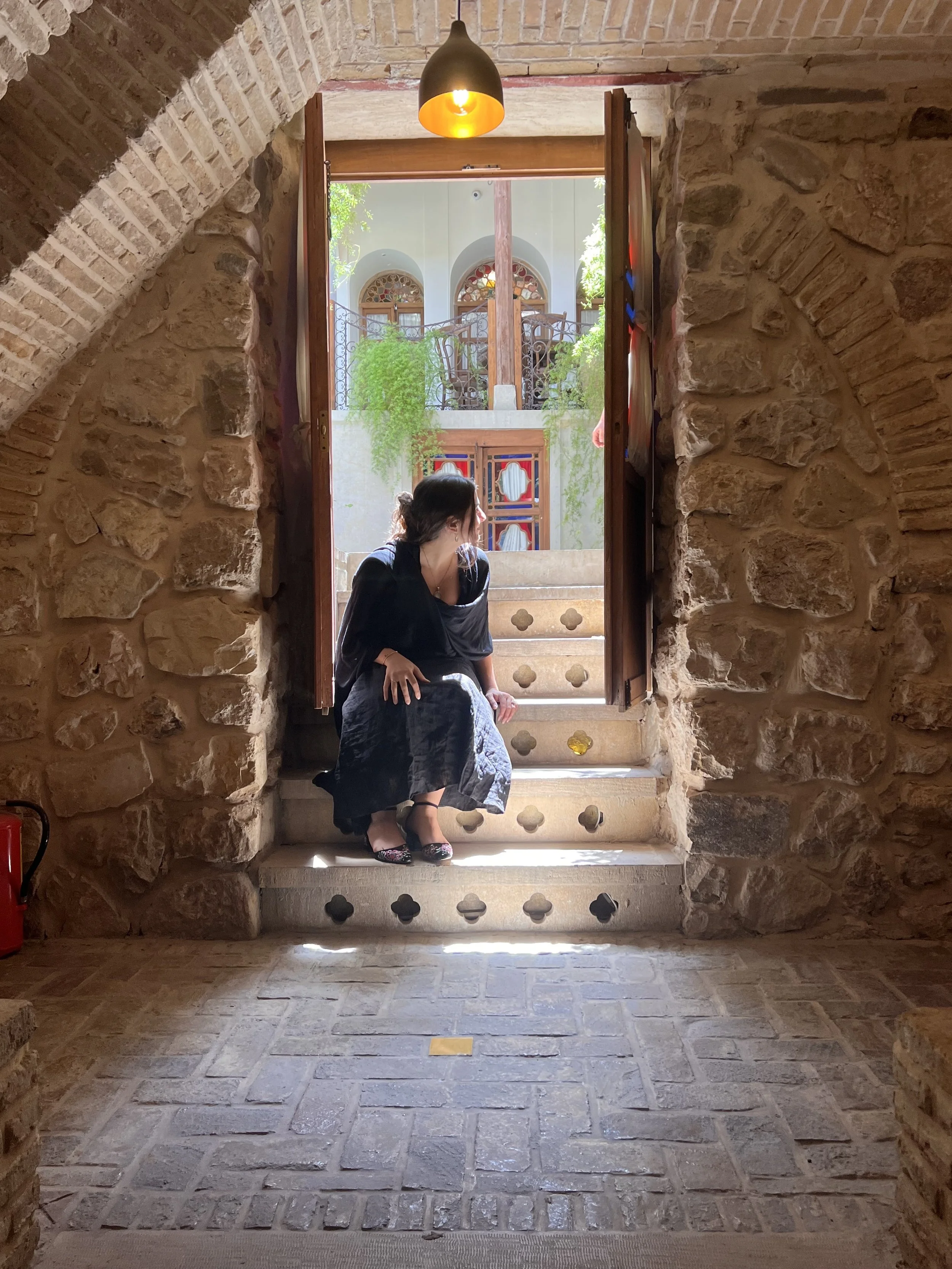
In Masjid Nasir Al Mulk - Shiraz, Iran (est. 1888)
Then, I was lucky enough to fall in love with a beautiful Iranian man. And he invited me into the world of Persian cuisine, music, culture, poetry and art, which I had never encountered before, and a special place opened in my heart for Iran and its people.
Just because in our lifetimes, our people and homelands have struggled, does not mean there have not been moments of complete beauty, joy and fulfilment for the people living there, or even for myself while visiting. I recall eating fresh kaak bi knafeh in the urban streets of Tripoli, Lebanon, early in the warm, summer mornings. Running around the pools with our family friend’s kids, all of us wonderfully tan, in the beautiful chalets of Beirut. Watching that burning Mediterranean sunset over the horizon, surrounded by all of my kinsfolk.
I recall listening to live Persian music in a hundreds year old Vakil Bazaar in the winding streets of Shiraz, while eating the most delicious faloodeh ice cream. Having my breath taken away again and again by every new palace we visited in Isfahan, wondering how they could have such incredible craftsmanship and mastery of art all those long years ago. Having tea with my Mamani and speaking broken farsi to her, in her ever warm, ever inviting home.
Life and beauty exists even in occupation, oppression or economic and political upheaval. I have been blessed to experience both sides, the beauty of our ancestral homelands, and feeling the privilege of being raised in the safety of a Western nation like beautiful Australia.
My focus on sharing these experiences is to challenge the phenomenon of ‘context inflation’ in psychology, which may be otherwise known as the experience of events being made to feel more psychologically intense, due to their contextual information, such as the emotional state you were in at the time, cultural perceptions, personal memory biases, worldview, social narratives and the overall group interpretation of an event. When you begin to challenge the contextual information, what you experience is a new perspective, one that may offer you some peace, relief and even, dare I say, hope.

Chehel Sotoun Palace - Isfahan, Iran (est. 1647)
We cannot deny that the news and media agencies require a profit to operate. It has been found through very unfortunate (but important) research in media psychology that more inflammatory, negative and sensationalist headlines get more clicks, which boosts profit. It was also found that viewers were more likely to remember the content of the stories they viewed when they were more negative and generated more fear, likely because the nervous system enters fight-flight survival mode and is mapping the information as necessary information relevant for survival.
They also disproportionately cover the most extreme, rare and devastating events, creating an altered perception in the worldview of the every day person, that the world is constantly a tragic, horrible and painful place. They prey on our pre-existing negativity biases, which pull us toward threatening or negative information, as again, it may be useful for our survival, in the context of life-threatening events.
Hold these pieces of information in mind when you consciously engage with news stories, and what you begin to realise is that if we rely on a profit-driven company to determine our perceptions of world events and observing history unfolding before our very eyes, then we are unwittingly agreeing to be misled down a nihilistic, depressed and learned helplessness path where we feel stuck, perpetually triggered and fearful, every minute of every day.
However, if we start to expand our contexts - as in we challenge our own negativity biases, cultural perceptions, time-based settings and pull away from the way the stories are being framed by the news - we start to experience an expansion of our contexts, rather than an inflation. This naturally reduces the psychological intensity of our experiences.

Iran Mehr Hotel - Shiraz, Iran (est. late 1700’s)
For example, did you know that Lebanon has recorded 14-15 major conquests and wars in the last 4000 years of its recorded history?
Egyptian domination of Canaan/Phoenicia (c. 1500–1200 BCE)
Neo-Assyrian Empire conquest (c. 9th–7th century BCE)
Neo-Babylonian Empire rule (c. 605–539 BCE)
Achaemenid Persian Empire rule (539–333 BCE)
Alexander the Great / Macedonian conquest (333 BCE)
Seleucid Empire control (c. 301–64 BCE)
Roman Empire annexation (64 BCE)
Byzantine Empire rule (395–636 CE)
Early Islamic conquests (Rashidun → Umayyad → Abbasid rule) (636–1099)
Crusades / Crusader states occupation (1099–1291)
Mamluk Sultanate rule (1291–1516)
Ottoman Empire rule (1516–1918)
France Mandate of Lebanon (1920–1943)
Syrian occupation of Lebanon (1976–2005)
Israeli occupation of southern Lebanon (1982–2000)
Iran has experienced about 10 major invasions in that approximate same recorded period of time.
Assyrian domination of parts of western Iran (c. 9th–7th century BCE)
Macedonian conquest by Alexander the Great (330 BCE) – fall of the Achaemenid Empire
Seleucid Greek rule (312–247 BCE)
Arab Muslim conquest of Persia (633–651 CE) – fall of the Sasanian Empire
Turkic dynasties and steppe invasions (Ghaznavids, Seljuks, 10th–12th centuries)
Mongol invasion and Ilkhanate rule (1219–1335)
Timurid conquest by Timur (late 1300s)
Afghan invasion ending the Safavid Empire (1722)
Anglo‑Soviet occupation of Iran during World War II (1941–1946)
Islamic dictatorship (1979–present)
Our countries are older than we are, older than we can even comprehend. They have suffered, been oppressed, even been destroyed and then rebuilt. They have created art, food, music, poetry, architecture, dance and an enduring way of life through culture, that has survived these thousands of years of oppression. Why, my sweet reader, do you believe now will be any different? Just because it is in your time? Are people not still holding loved ones and singing lullabies to children? Are people not still falling in love? Are musicians not still making music? Are poets not still writing their souls to the page, in their beautiful native tongue? Are artists not still creating art, born out of the pain and suffering?
I think to this quote I recently read from Andrei Tarkovsky:
“An artist never works under ideal conditions. If they existed, his work wouldn’t exist, for the artist doesn’t live in a vacuum. Some sort of pressure must exist. The artist exists because the world is not perfect. Art would be useless if the world were perfect, as man wouldn’t look for harmony but would simply live in it. Art is born out of an ill-designed world.”
These are dark times indeed, but when you reflect on the fact that life endures, no matter what oppressive force it is being challenged with, whether it is a destructive tsunami, or an invading regime, then suddenly you realise that perhaps life is not about moving in a simple, linear line of peace. Perhaps we are here to experience the depth of tragedy, to make art in the face of death and destruction, to love unapologetically when the world tries to make us cry. Hope, in this way, is a choice. I hope you choose it today.
Poetic Reflections
"It’s like in the great stories, Mr. Frodo.
The ones that really mattered.
Full of darkness, and danger, and sometimes you didn’t want to know the end…
because how could the end be happy?
But in the end, it’s only a passing thing, this shadow.
Even darkness must pass.
A new day will come, and when the sun shines, it will shine out the clearer.
So you keep going.
There’s some good in this world, Mr. Frodo… and it’s worth fighting for."
- Samwise Gamgee, The Two Towers
Therapeutic Skill of the Week
I usually guided my clients to do more natural based breathing, following their rhythms and focusing on extending the exhale, but there is a simple charm to the skill of box breathing (also called square breathing). I think adding the imagery of the four, clean lines of a square can be very stabilising to the mind. This evidence-based breathing technique can help you reduce stress, calm the nervous system, and improve focus.
You breathe in a 4-step pattern, like drawing the sides of a square or box. Each step is usually 4 seconds, but you can adjust if needed.
Inhale – Breathe in slowly through your nose for 4 seconds.
Hold – Keep your breath for 4 seconds.
Exhale – Breathe out slowly through your mouth for 4 seconds.
Hold – Pause with an empty lung for 4 seconds.
Repeat this cycle for 4–6 rounds or until you feel calm.
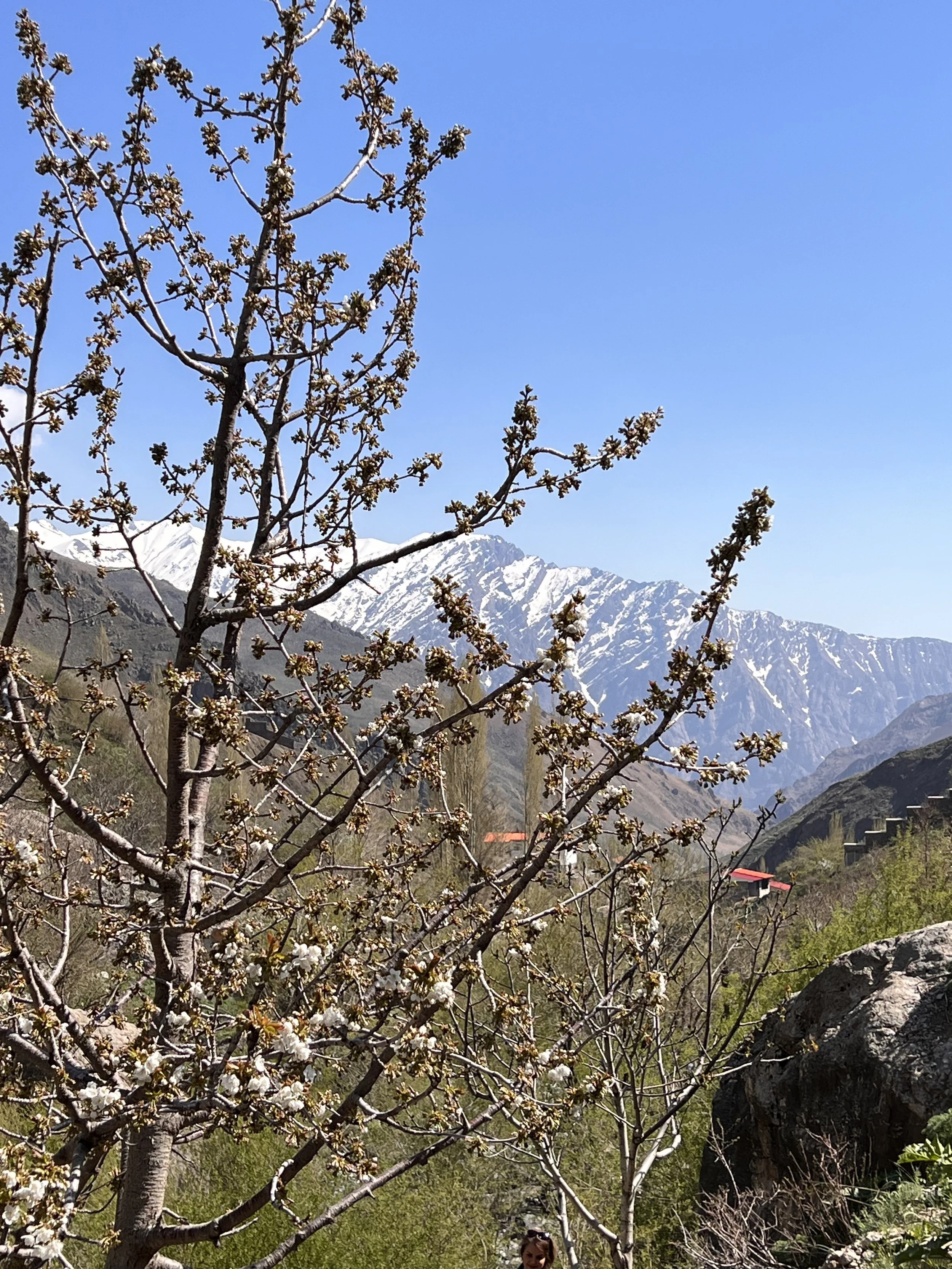
Mountains in the north of Iran
Thank you for reading this far, if you have. I believe it is unfortunate that in our time, we are to witness such hardships, but my final comfort is that I am almost 100% certain that our parents, grandparents, great grandparents, great great grandparents and so on and so forth, have all said the exact same sentence in their time as well. Rather than dwell on the circumstances out of our control, why don’t we focus on the things we can do, right now. Like:
Focus on making eye contact with that little child in the stroller and making a funny face, just to see them smile.
Help the old woman with her shopping bags.
When you eat dinner, think kindly to those who cannot afford or find a warm meal, and consider donating to charity organisations.
Pick up that piece of rubbish, to save someone from slipping on it later on.
Pay for the coffee of the stranger behind you in the line, just because.
Be the goodness you wish to see in the world, rather than wait for the world to be good enough for you to show up in.
Hold on to hope, it is your light at the end of the tunnel.
All my very best, with love and hope,
Tala
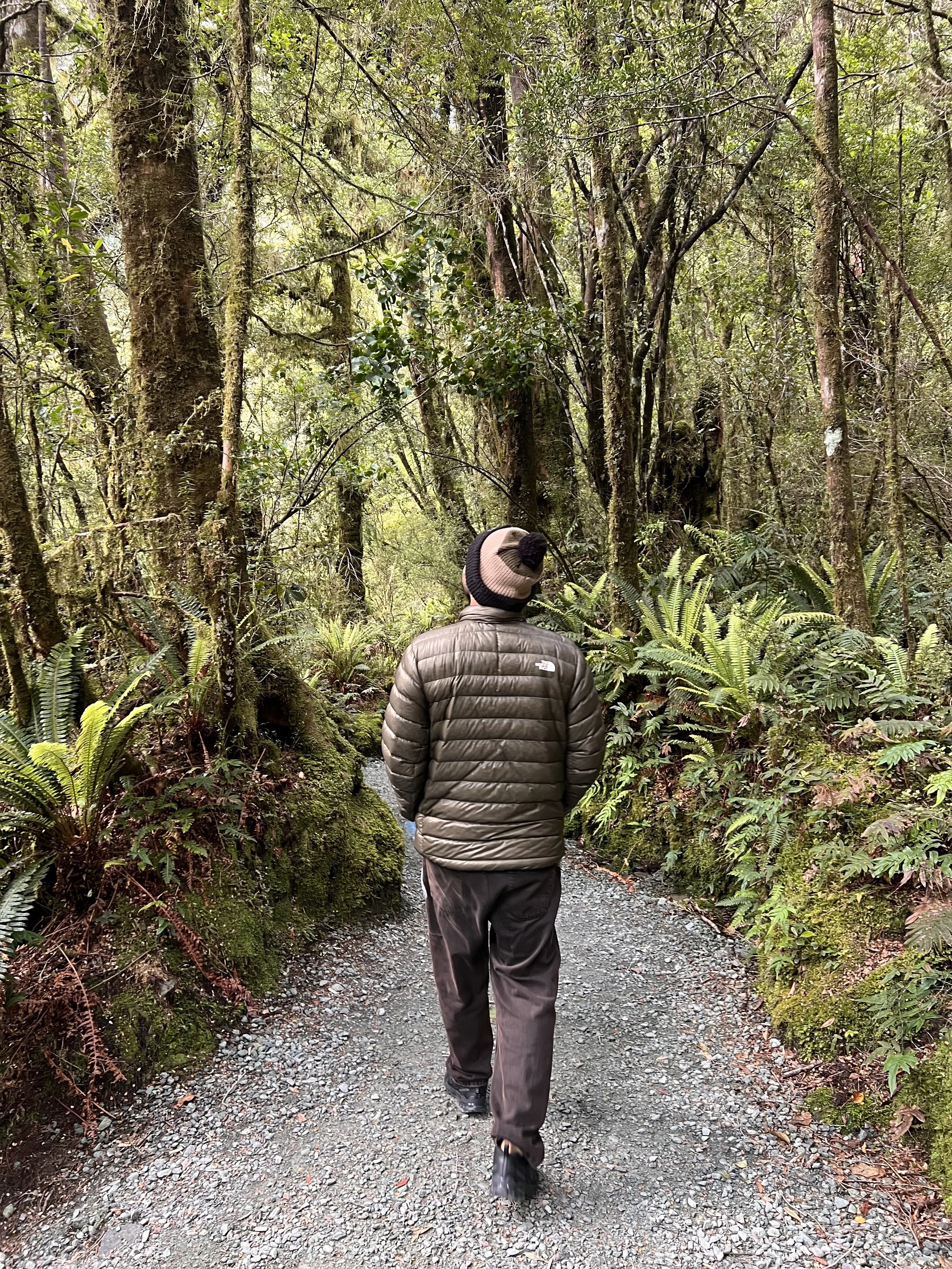
Shinrin Yoku
Shinrin Yoku will change your life. I know it has changed mine.
Good Afternoon. Would you not agree with me that there is nothing better than seeing golden sun rays breaking through a canopy of the most lush, vibrant and green leaves you have ever seen? What can soften a heart like a leaf quivering in fresh spring winds? What can inspire awe more than seeing the sky reflected in the spherical perfection of a single drop of dew on the powder pink petal of a fragrant flower?
Nature has an inherent magic to it, that is something none of us can deny. And you know what, even if we wanted to deny it, we couldn’t! There is actually a growing body of scientific literature that tells us that just spending some mindful time in nature actually heals us, whether we like it or not. This body of research emerged from the early 2000’s in none other than beautiful Japan, after their government started an initiative in the early 80’s to encourage their population to visit natural spaces to improve health and wellbeing, following the rapid increase of rural populations migrating into cramped, urban spaces.
This practice was named Shinrin Yoku, or Forest Bathing in English (Li, 2000). This initiative was boosted to combat ‘technostress’, which is the cumulative stress that we all build up over the many minutes, hours and days spent tethered to our technological devices, which play off of our cortisol and dopamine levels to keep us addicted, always coming back for more. I won’t waste too much time talking about stress, even though the literature has easily established the connection between our dependence to technology and our poor mental and physical health outcomes.
Today, I am focusing solely on the research supporting the beautiful practice of Shinrin Yoku. Ah, even just saying it slowly out loud is a mindful exercise. Shin-Rin-Yo-Ku. Feel the words flow from the back of the mouth, to the tip of the tongue. Feel the shape of your mouth change as you mouth out each word. Hear the sounds each word makes as it leaves your lips. Feel the vibration in your throat and chest as you generate enough energy to say the words. This kind of deep, mindful attunement sits at the heart of Shinrin Yoku. It is not putting your head down, earphones in and speed-climbing a mountain, to take a quick pic at the peak, post it on social media and jet down for an Iced Matcha and sauna at the bottom. No, no, my good friends. That is the antithesis of Shinrin Yoku.
Immersed in a bamboo cluster.
Just exposing your body to a natural space and doing nothing else significantly reduces your cortisol levels, and the effects sustain over time (Antonelli, Barbieri, & Donelli, 2019).
First thing’s first, no phones. No way to be reached or accessible to anyone or anything external to yourself, if you can find a spot with no telecommunication reception, even better.
That little SOS in the top right-hand corner of my phone are the three sweetest little letters I can see. When the brain is anticipating an alert, such as the ones we receive from our phone, it enters into a chronically alert or ‘readiness’ state, which produces a low-level form of stress, which can drain our brains over time (Ward, Duke, Gneezy, & Bos, 2017).
Second, the whole point of Shinrin Yoku is the exposure and quality of awareness, not the destination or even necessarily the breath-taking beauty of the location. You use your 5 senses to enhance your experience of the natural landscape you are in;
1) The various colours, shapes, sizes and locations of the natural objects in relation to your body
2) The smell of the natural world around you and all its various quality, depth and richness
3) The texture and feel of the natural environment, sensing the minute differences in sensory input
4) The lush sounds of all of nature, living, breathing and ever moving around you
5) The tastes of the natural plants, waters and even the air, enhancing senses you rarely consider while outside your house
It is not a rushed experience, where the more you see, the better. It is about slowing down, walking with intention, mindfully absorbing as much detail as you are able to, moment to moment.
A true practice of mindfulness. I feel calm now just describing the process.
Third comes the self reflection. Invite your mind to reflect deeply within your body, allowing all the systems of survival and activation to wind-down, switch off and become present.
This invites your mind to enter into a state called soft fascination, wherein you observe stimuli that the brain does not have to work hard to process, such as the gentle swaying of a branch in the wind, a sight that our nervous systems have evolved to observe for thousands of years.
This leaves the direct attentional processes of the brain offline, allowing our brains to rest, recover and even reflect down creative pathways that we normally cannot access while we are “on”, which is what happens when the Default Mode Network operates (Basu, Duvall, & Kaplan, 2019).
Now to the juicy health benefits, take a gander at this long list of positive mental and physical health benefits of doing Shinrin Yoku, extracted from the paper by Li, 2000 and supported by multiple other meta-analytic studies (all referenced below):
Shinrin-yoku increases human natural killer (NK) activity, the number of NK cells, and the intracellular levels of anti-cancer proteins, suggesting a preventive effect on cancers.
Reduces blood pressure and heart rate, showing preventive effect on hypertension and heart diseases.
Reduces stress hormones, such as urinary adrenaline and noradrenaline and salivary/serum cortisol contributing to stress management.
Increases the activity of parasympathetic nerves and reduces the activity of sympathetic nerves to stabilise the balance of autonomic nervous system.
Improves sleep quality.
Increases the levels of serum adiponectin and dehydroepiandrosterone sulfate (helpful for insulin resistance and inflammation).
In the Profile of Mood States (POMS) test, Shinrin-yoku reduces the scores for anxiety, depression, anger, fatigue, and confusion, and increases the score for vigour, showing preventive effects on depression.
Reductions in negative repetitive thinking regarding oneself (rumination)
Enhances self-compassion, well-being, introspection, and mindfulness.
What is even more incredible, is that these health effects can last anywhere from 7 days to a whole month after your Shinrin Yoku trip! Wow!
Therapeutic Skill of the Week
I will make this super duper easy for you guys. Go sit outside in nature. For just 20-30 minutes. Leave your phone inside, and follow the prompts above where you are mindfully attuning to the natural space that you are in.
That’s it, easy peasy.
Thank you for reading this far, if you have! I truly appreciate the time and support you show to these little budding newsletters.
All my very best, with love and hope,
Tala
Poetic Reflections
“Supple chords, plucked by wind
Ever moving, ever bending
The song of divinity, unending”
- TM
References
Antonelli, M., Barbieri, G., & Donelli, D. (2019). Effects of forest bathing (shinrin-yoku) on levels of cortisol as a stress biomarker: a systematic review and meta-analysis. International journal of biometeorology, 63(8), 1117-1134.
Basu, A., Duvall, J., & Kaplan, R. (2019). Attention restoration theory: Exploring the role of soft fascination and mental bandwidth. Environment and Behavior, 51(9-10), 1055-1081.
He, M., Hu, Y., Wen, Y., Wang, X., Wei, Y., Sheng, G., & Wang, G. (2024). The impacts of forest therapy on the physical and mental health of college students: a review. Forests, 15(4), 682.
Ideno, Y., Hayashi, K., Abe, Y., Ueda, K., Iso, H., Noda, M., ... & Suzuki, S. (2017). Blood pressure-lowering effect of Shinrin-yoku (Forest bathing): A systematic review and meta-analysis. BMC complementary and alternative medicine, 17(1), 409.
Li, Q. (2022). Effects of forest environment (Shinrin-yoku/Forest bathing) on health promotion and disease prevention—the Establishment of “Forest Medicine”—. Environmental health and preventive medicine, 27, 43-43.
Siah, C. J. R., Goh, Y. S., Lee, J., Poon, S. N., Ow Yong, J. Q. Y., & Tam, W. S. W. (2023). The effects of forest bathing on psychological well‐being: A systematic review and meta‐analysis. International journal of mental health nursing, 32(4), 1038-1054.
Stier-Jarmer, M., Throner, V., Kirschneck, M., Immich, G., Frisch, D., & Schuh, A. (2021). The psychological and physical effects of forests on human health: A systematic review of systematic reviews and meta-analyses. International journal of environmental research and public health, 18(4), 1770.
Szitás, D., Halamová, J., Ottingerová, L., & Schroevers, M. (2024). The effects of forest bathing on self-criticism, self-compassion, and self-protection: A systematic review. Journal of Environmental Psychology, 97, 102372.
Vermeesch, A. L., Ellsworth-Kopkowski, A., Prather, J. G., Passel, C., Rogers, H. H., & Hansen, M. M. (2024). Shinrin-Yoku 森林浴 (Forest Bathing): A Scoping Review of the Global Research on the Effects of Spending Time in Nature. Global Advances in Integrative Medicine and Health, 13, 27536130241231258.
Ward, A. F., Duke, K., Gneezy, A., & Bos, M. W. (2017). Brain drain: The mere presence of one’s own smartphone reduces available cognitive capacity. Journal of the association for consumer research, 2(2), 140-154.
I Finally Experienced Integration
Explore this elusive concept of integration with me.
Hello again, whomever this is reaching. I write this entry from a place of deep reflection. I am fascinated by this concept of integration. It has long eluded my comprehension, though I’ve come across it many times in theoretical readings, particularly Jungian psychotherapy. The goal is integration. If you could somehow integrate aspects of your shadow self into your consciousness, then the work is done.
But what on earth is integration? What does it even mean? Various definitions explore the process of unifying parts into a whole. Experientially, what does this look like? Over your many years of development, you will undoubtedly learn many things about yourself, yet that awareness is not enough to make whole the disparate parts. You can know what is wrong, yet awareness is not enough to overcome the seemingly endless personal challenges, patterns of self sabotage and confusion around thoughts, feelings and behaviours. Why was conscious awareness not enough?
Compassionate responses to those parts don’t seem to work either. Often times, you notice a wounded part activate, and you soothe, comfort and coddle those aspects of yourself - the wounded parts that seek respite through withdrawal, disconnection or avoidant behaviours. That too, seems to be a temporary solution. So what is missing, that conscious awareness and compassionate response was not enough? Emotional processing does not seem to work either. Pain can be grieved, cried and processed through, and still the wounds can linger. It is not yet integrated. The parts remain just that, disconnected parts. There was no ‘whole’ yet.
Hmmm. Confusing. As time progresses and life humbles you with deep, painful experiences, something remarkable can happen. Trauma can be such a perspective-expanding and life altering experience, where unhelpful, restrictive and even sometimes judgemental thoughts and entrenched beliefs about self, the world and others can be let go of and replaced.
Within my own experience of integration, I learned to turn towards my experiences with a genuine, humble honesty. I surrendered to the truth of myself, that I too, have darkness within me, as all people do. And I did not soothe it, I did not mask it or explain it away. I simply allowed it to be, receiving the information as it is, without changing it, beautifying or diluting it. It was just the truth. Just reality. And I received it with acceptance. For the first time, I simply accepted that those parts existed, as I accepted that the sky was blue and the clouds were white. It was neither relieving, nor shame inducing. It was simply reality.

And then it happened. Integration. I finally experienced this magical concept, that I had so often read about and so little understood. I believe that integration can only occur when you accept a part of yourself, often an unseemly, shameful or ‘bad’ part, with openness, honesty and acceptance. No changing, no minimisation, no explaining it away. It just is, and it is allowed to be, just as it is. It is now whole with everything else, and it fits, because it has always fit. You just never allowed yourself to acknowledge its existence. Somehow, through surrender, I found peace. through acceptance, I found love. Through confrontation of truth in reality, I experienced integration.
And man, is it something else. You are calm, at peace, and have complete clarity over your inner world. Your experiences cease to scare you, and you feel ready to explore these new aspects of yourself with confident strength and deep understanding. They are no longer your puppeteers from the shadows, leading you into old, unhelpful patterns. They are now exposed to the light and visible, and you see just how small and un-scary they are. You reclaim control and walk alongside those parts, now part of a whole, and now under your control. This, I believe, is integration.
Therapeutic Skill of the Week
This week, we are going to discuss deep, diaphragmatic breathing. I am sure you are all sick of the internet and therapists telling you to breathe deeply, but we won’t stop recommending it because it seriously works wonders!
Half the time, your nervous system is distressed because you are not getting enough oxygen, which places your body into a stressed-state. We breathe shallow or even hold our breath when we feel anxious or overwhelmed, so focusing on deep, mindful and diaphragmatic breaths can help short-circuit your stress system, returning slowly but surely to the blessed shores of ventral vagal. Let us begin:
1) Sitting comfortably in a chair or lying on your back, place one hand on your chest and one hand on your stomach.
2) Turn your attention to your stomach, slowly deepening your breath and feeling your stomach rise with the inhale, falling with the exhale. Do your best, naturally we breathe through our chest, so give yourself some time to find your rhythm.
3) As you get comfortable with the rhythm of breath, start to lengthen the exhale, breathing out slow and long, longer than the inhale if possible. This will help the body settle deeper into a relaxed state.
4) Breathe in this way for a few minutes, checking in regularly on your body and noticing when your mind wanders away, gently bringing it back to the breath, back to the stomach and the rhythm of your breath.
All my very best, with love and hope,
Tala
Poetic Reflections
“Try not to resist the changes that come your way.
Instead, let life live through you.
And do not worry that your life is turning upside down.
How do you know that the side you are used to is better than the one to come?”
- Rumi
The Psychological Benefits of Food
Learn about the psychological benefits of food.
Food is more than just nourishment for the body
It is a way to find comfort after a long day of work
It offers emotional soothing when the world feels too cruel
It is a reliable friend, always there for you when other relationships let you down
It boosts dopamine, offering a brief moment of happiness in an otherwise heavy life
It takes you back to your childhood, calling back nostalgic memories of warm dishes made with love
It is a distraction, taking you away from stressful thoughts or feelings
It brings energy to a depleted body
It can inspire and excite, heal and rejuvenate, sicken and destroy
Join me in a curious exploration of the psychological role that food plays in our lives, and how we can use specific interventions to harness the power of food, rather than feel we are at the mercy of our appetites and compulsions
Happy Friday, dearest readers. I wonder what you have eaten for breakfast or lunch, and how that food is currently sitting with you. How does your body feel? What purpose did your meal fulfil for today? Nourishment, comfort, energy, joy, nostalgia, healing, or distraction? Take a moment with me to reflect.
I enjoyed a delicious charcoal chicken meal for lunch (very thankful for my Lebanese heritage here when it comes to food - so blessed) and I tried as best as I could to eat the meal mindfully. I focused on the purpose of nourishment, as I had an intense workout at the gym this morning. I avoided the hot chips, eating the protein and making sure to really chew the food, remembering that digestion begins in the mouth, with important enzymes in our saliva breaking down the food as we eat (Patricia & Dhamoon, 2019). This is a very important consideration to hold in mind, that mindful eating plays a significant role in nutrient absorption, as well as in regulating the nervous system. Our guts are deeply implicated within our central nervous system and this has a direct impact on our emotional stability and regulation. If our gut is agitated, inflamed, dysfunctional or fatigued, this can have a direct impact on our mood. This is outlined below, in the bi-directional relationship between our gut health and microbiome, and the experienced emotional wellbeing of an individual. Research has also well established the relationship between sugar and caffeine intake on anxiety, with further research exploring the role of nutrient deficiency (Vitamin D, B12, Iron) in depression (Anglin et al., 2013) and even psychosis (Payinda & Hansen, 2000).
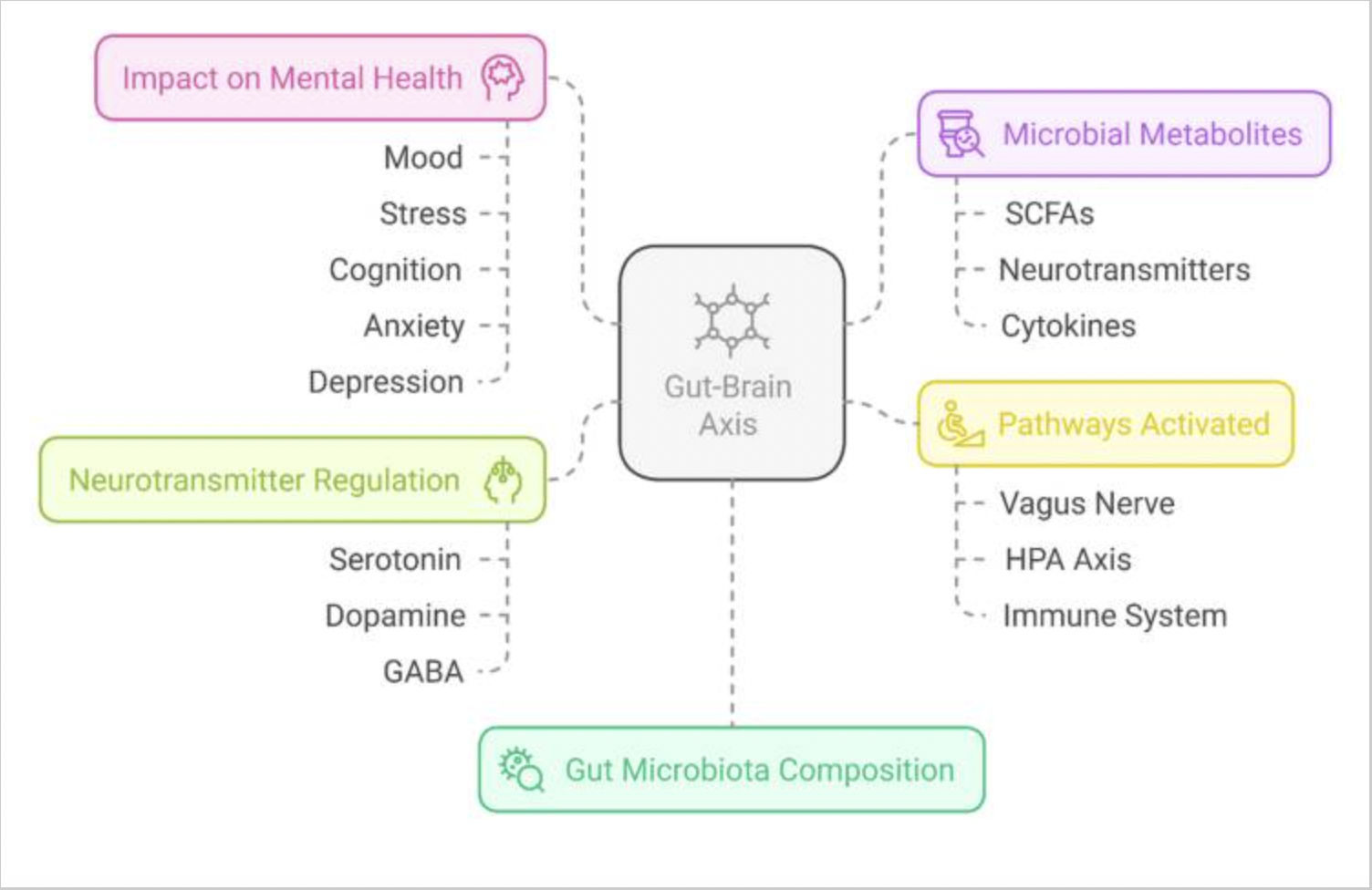
Research shows that imbalances in gut bacteria are associated with conditions such as anxiety, depression, and stress, due to reduced metabolites, increased inflammation, and changes in stress-response systems.
Gut microbes can influence brain function by producing neurotransmitters, signalling through the vagus nerve, and affecting the body’s stress hormones. Eating probiotics, switching to a Mediterranean diet, and other microbiome-based approaches, show promise for improving mental health.
(Kanchanbala et al., 2025)
https://pmc.ncbi.nlm.nih.gov/articles/PMC12007925/
Fascinating stuff, huh?
Think back to a time where you were on the verge of exploding in anger, and you had no clue what the trigger was. Then suddenly, someone suggests you eat something and one little snickers bar later, the demon possessing your body has left and you are now a happy, bubbly human again.
Or perhaps you were crying uncontrollably, finding every little thing overwhelming and distressing, and then you eat a sandwich and realise that your body was just trying to tell you that you were hungry. But why would our body use emotional cues like anger and sadness to prompt eating, rather than the tell-tale sign of hunger? What an interesting phenomenon! Without going into too much biological science and research, my intuition as a trauma-focused therapist says that somewhere early on in our lives, we learned to associate threat with situations where food was involved.
Either that, or we learned to dissociate from our inner bodily experiences entirely, whether due to intolerable traumatic pain, where escaping the physical experience was our only respite, or due to repeated experiences of neglect. The child adapts quickly. When we learn that the people in our environment do not care to attune to our physical experiences and help us to explore them safely, we quickly learn to suppress these useless cues of hunger, sadness, fear, tiredness, thirst and so much more. We do not discriminate between emotional cues or physiological cues. All internal experiences must be muted. And thus, we result in having a dissociated experience from our inner world. If you were raised in an environment where meal times were stressful, whether there was not enough food to eat and so you learned to swallow first, taste later, or perhaps meals at the dinner table were a guaranteed arena of conflict and tension, our nervous systems adapt to view mealtime and food as a stressful chore, rather than an enjoyable, nourishing practice of self care.
However, we are now (hopefully) fully grown, autonomous adults in safe environments. We can learn to re-attune to the inner sensations of our bodies, using mindful awareness, to establish a safe connection with our body cues. By practising mindful eating - chewing our food slowly, tasting all the flavours, smelling our food before we eat it, looking at our food intently, staying grounded in our body as we chew and swallow - we can learn to enjoy every part of the eating experience, while also differentiating between the sensations of hunger, digestion, satiation, enjoyment, disgust, excitement, anticipation and satisfaction. You can also learn to associate the seemingly unrelated somatic symptoms, such as a headache with a cue for thirst, or the feeling of uncontrollable sadness with a likely cue that it’s time for our next meal. Eat your food with every part of your body, your hands, eyes, nose, ears, while staying mindfully connected to your emotional experience, bodily experience and integrate all these sensations as one holistic practice.
“Dopaminergic activation is triggered by the auditory and visual as well as the tactile, olfactory, and gustatory stimuli of foods. While dopamine plays a central role in the feeding and food-seeking of normal animals, some food rewarded learning can be seen in genetically engineered dopamine-deficient mice.” (Wise, 2006)

Healing from food-related wounds takes time.
Be gentle with yourself in this process.
I say all of this with enthusiastic optimism, however I know the complexity that can exist with food. It is not just about threat, it can also induce deep and enduring feelings of shame. Or it can be an avenue to exert control over your otherwise unstable and out of control life, resulting in an eating disorder. These more complex presentations of food and eating disorders must be explored with a qualified psychologist and dietitian, taking a multi-disciplinary approach to healing these deep wounds around food and meal times. Reach out for support if this is something you struggle with. You are not alone and you do not have to figure it all out by yourself.
Thank you for joining me in this reflective exploration of the role that food plays in our psychological wellbeing. I sincerely hope you learned something new. Read below for an in-depth exploration of mindfulness skills we can use to reconnect safely to eating food and tuning in to our bodily sensations while we do so. You did great for reading this far!
Therapeutic Skill of the Week
This week, we are going to focus on mindful eating as a way to self soothe and regulate the nervous system, while healing your relationship with food and eating practices.
To eat mindfully, our full attention and conscious awareness must be focused on the food in front of us.
1) Look at the colours, shapes, textures of your meal. Enjoy the vibrant differences in shades, explore how the various colour palette of your meal makes you feel.
2) Stop and smell your food before you eat. Try to tune in to the various flavour profiles; can you smell citrus, chocolate, fruity tones, spicy tones, salty, oceanic smells.
3) Taste the food slowly and mindfully. Feel the different textures (crunchy, smooth) and temperatures (cool, hot). Taste the flavour profiles of your food; salty, sweet, umami, sour, bitter. Move the food to different parts of your tongue to explore different dimensions of flavour.
4) Listen to the sounds that the food makes as you chew and swallow, moving the food on your plate, using your utensils to pick up the food and put them in your mouth.
At every stage of eating, from before you taste the first bite, to when your plate is clean, stay grounded in the experience of your body. Regularly check in with your stomach, take deep breaths throughout and focus on how your body is feeling throughout. Label the emotions that come up for you as you eat, if it brings back any fond memories. How does the food make you feel?
Give it your best go and practice mindful eating every day to improve and enhance this skill over time.
All my very best, with love and hope,
Tala
Poetic Reflections
“A dry loaf eaten in peace
is better than a feast eaten in fear.”
- Saadi Shirazi, Golestan
References
Anglin, R. E., Samaan, Z., Walter, S. D., & McDonald, S. D. (2013). Vitamin D deficiency and depression in adults: systematic review and meta-analysis. The British journal of psychiatry, 202(2), 100-107.
Barma, M. D., Purohit, B. M., Priya, H., Malhotra, S., Bhadauria, U. S., & Duggal, R. (2026). Sweet Misery: Association of Sugar Consumption With Anxiety and Depression - A Systematic Review. Obesity Reviews, 27(1), 1-19.
Kanchanbala, R., Neha, S., Sunil, N., Kumar, S., Kiran, D., Dhrubajyoti, B., & Mohammad, I. H. Q. (2025). The bidirectional relationship between the gut microbiome and mental health: a comprehensive review. Cureus, 17(3).
Patricia, J. J., & Dhamoon, A. S. (2019). Physiology, digestion.
Payinda, G., & Hansen, T. (2000). Vitamin B12 deficiency manifested as psychosis without anemia. American Journal of Psychiatry, 157(4), 660-661.
Wise, R. A. (2006). Role of brain dopamine in food reward and reinforcement. Philosophical Transactions of the Royal Society B: Biological Sciences, 361(1471), 1149-1158.
Learning To Trust
Good Morning. I hope you had a pleasant night’s rest filled with beautiful dreams about beautiful things.
I was inspired to write about trust, after receiving an email from a longstanding client of mine, expressing distress around her enduring inability to trust both herself and her partner in their relationship. Such a common experience, I think that fear and love go hand in hand. Do they feel about me the same way I feel about them? Can I trust what they say, that they will never leave me? How can I trust my own self, that I won’t ruin this beautiful thing with my carelessness or with my fears?
Love, true love, cannot be forced or compelled. It must be chosen freely, actively and with your full self. If you carry within you the seed of self doubt and worthlessness, it can feel impossible that someone would choose you, over all the other seemingly better options out there. Why you? What is so special about you, that they would choose to give all this love to you, and keep choosing you day after day? Therein lies the inner conflict.
“I want to trust that this is real, but a part of me whispers that it isn’t. That it is only a matter of time before they get bored, or lose interest, or figure out that I have been hiding just how horrible I am, and once they realise all of this, that they can do so much better, they will leave me.” This fear of abandonment may sit at the heart of every human being, it depends how well you choose to know yourself, to discover just how loud those voices can get. We were designed to seek connection and closeness, our nervous systems feel the most safe when we have a secure attachment to another individual. This unification with the other is the only antidote to the fear of the world, to the fear of death and the unbearable, ego-destroying fear of loneliness.
Within a spiritual framework, this aligns with the reality that we were once at one with all of creation, and in becoming human, we became separate and singular. Our psyche has a deep memory of what it feels like to be united and safe, and so we seek it throughout our lifespan, first through relationships, and then, if we have enough awareness and discipline, through a relationship with the divine. This is the safest and most secure attachment to form in your lifetime, for God is eternal and does not die, and He has promised that He is with you, wherever you are, so you can never be abandoned.
In the womb of our mother or in the womb of Mercy.
Safe in suspension, our nervous systems ever seek this feeling of complete and whole safety.
Within a psychological framework, this is mirrored through the unification with our mothers in the womb - the only time our nervous systems felt completely and utterly safe. All was well, all my needs were met, I knew no fear, nor pain, nor suffering. My only reality was the music of my mother’s heartbeat and the warmth of the water around me, suspended me in weightlessness. Equally, our nervous systems retain a memory of that experience and so seek to emulate that through our current relationships. However, humans, unlike the Divine, are flawed and equally needy. And so to feel absolutely satisfied and sustained in a relationship is, I think it’s safe to say, impossible.
However, I digress. Back to trust. Knowing that we are designed to seek the safety of unifying our bodies and souls with another individual, someone who sees us and loves us for who we are, how can we accept this love once it finally knocks on our door? How can we welcome it in with open arms and know that we won’t cast it away or reject it from fear of losing it? The answer is trust. To believe with full conviction that they won’t leave you, knowing that they might. It is the rejection of the awful reality and giving your full awareness, energy and focus to the reality where they don’t let you down. It is in believing that you are someone who is worth loving, that you are a worthy, loveable individual and maybe this person just happens to like what you have to offer. It is choosing to believe that love has finally found you, and you are safe to accept it and welcome it in.
The analogy that I provided my client was this:
To learn to trust someone is like realising that you are swimming in the ocean and have been caught in wild waves that both excite you and threaten to drown you. From fear, you begin to swim madly, fighting against each wave, trying to predict the patterns of what will come next and struggling against the current, becoming exhausted and frustrated with all the effort you exert, realising that you are getting nowhere. Then you try, just for a moment, to surrender to the water, lay back and let all your expectations, predictions and need to control the situation go, and just float atop the waves. You choose to trust that the water will not swallow you whole, though you still feel the terror that it will. That fear exists because there is a very real chance that a wave may come crashing down on you as you float and drown you, and there is also a chance it won't. That is the risk. That is the scary part of being in a relationship, for it is guaranteed that it will end, either through death or choice, for all things in life are temporary. And yes, it will devastate you when it happens, but how lovely to have floated on the waves and enjoyed the beauty of the sky, smelled the tangy saltiness of the ocean and listened to the melody of the waves, while you waited for the end. Trust affords you the joy of being present in the love while it is yours, enjoying every moment of it and accepting that the end will come, and you have made the most of the love while you had it. No regrets. Only love.

I fear that none of us will ever have that moment of "Ah, I am perfectly safe and content and happy here", because we will never be 100% certain that the ones who love us will not leave. And that is okay. Do not despair nor lose hope, and do not allow your mind to spiral and catastrophise that your feelings are indicative of never being able to find happiness. The more you practice trust, the easier it will become and the more you will find out just how beautiful the ocean can be.
Therapeutic Skill of the Week
This section will introduce one new skill each week that we have highlighted as a great practice to enrich your week with mental health benefits. This week, I would like to focus on singing and humming as a tool to regulate your nervous system.
Honestly, there is no end to how long I can talk about psychology, for it excites me so, but I promise to be brief and only give the necessary information about singing and humming (though there is SO much I want to say about it!).
It is incredibly regulating to sing or hum, as the vibrations stimulate the vagus nerve that sits adjacent to your vocal chords. That stimulation helps the nervous system shift from sympathetic arousal (fight/flight) to parasympathetic activation (rest/digest). We have culturally been using singing and melodies for healing for centuries. The first mental health hospital in recorded history was the Bimarestan of Baghdad (c. 705–715 CE) and it was recorded to use holistic approaches to healing psychological conditions, including music therapy. All cultures have collective songs, in church we sing hymns together, countries have a national anthem that you start the day with at school, in the pub everyone sings at the top of their lungs “COUNTRY ROOOAAADDDD, TAKE ME HOOOOOOMMEEE, TO THE PLAAAAACEEEE, I BELOOOOONNNGGGG.” It’s safe to say, whether we like it or not, singing works and that is why it has stuck around so long.
So I am challenging you to sing a new kind of song every day this week. Choose a happy song one day, a sad song the next, a fast song, a slow song, an emotional song, an uplifting song. Explore how the different melodies and words mingle with the feelings in your heart, and use it to process your emotions. For me, the song that always gets me is Mad World by Gary Jules. Oh my heart. And do I sing it? Heck yeah! That and Hallelujah, the Jeff Buckley version. I’d love for you to leave me a comment of your favourite songs to sing. I do hope the comment function is working, if not, then vibe the song over to me. I’ll do my best to receive it.
All my very best, with love and hope,
Tala
The Beginning - Between Sessions
“Be happy for this moment. This moment is your life”
- Omar Khayyam
Welcome to the start of “Between Sessions”, a weekly newsletter where I invite you to join me in these quiet moments of reflection, where we will take stock of our week, make meaningful associations and try to integrate all the wisdoms and teachings that we have gained throughout the week.
Here are my commitments to you.
1) I shall never use AI to write these posts. It will be straight from my soul to yours, and as such, you may expect to see just a Few grammatical, errors or speling mistakes. Please be patient with me if you do see these, as I am prioritising integrity and authenticity over perfection, as I hope and pray you are doing as well.
2) I will share all the inspirational and emotional enlightening things that I encounter each week with you, in order to uplift and enliven your souls. Soulful enrichment is a necessary part of our daily lives, and so I will endeavour to enrich your beautiful souls with poetry, reflections, art, music, creative pursuits and meaningful activities to engage with in your daily lives.
3) As much as the chaos of life permits me, I will try to upload these newsletters once weekly, on Friday mornings.
4) We are going to have fun with it! I’m going to be my goofy, playful self to make sure that this is not just another useless, drivelling newsletter devoid of feeling, soul or life. Nay, I shall be as a living companion to you, beckoning your feeling forth through the screen, inviting you into the joyful weirdness, vulnerability and curiosity that makes life so much fun. I cannot wait for this journey to begin, and for you all to join me on this path.
Let us begin.
You will find me endlessly journalling, even while on holiday. It is my fondest companion and has witnessed so many events in my life. I have been journalling religiously since I was 18 years old, after I was gifted my first journal by my sister. I took this photo in New Zealand, writing my reflections of our trip, as I watched the sun set gently over the mountain ranges. The serenity I experienced in this moment was indescribable. I hope you find a reflective practice that is as soothing for your soul, as I have found journaling to be for mine.
I shall end this post with one of my favourite excerpts from a poem, which I think perfectly encapsulates the heart of what therapy hopes to achieve in present-minded awareness and gratitude.
“Be happy for this moment. This moment is your life”
- Omar Khayyam