
Learning To Trust
Good Morning. I hope you had a pleasant night’s rest filled with beautiful dreams about beautiful things.
I was inspired to write about trust, after receiving an email from a longstanding client of mine, expressing distress around her enduring inability to trust both herself and her partner in their relationship. Such a common experience, I think that fear and love go hand in hand. Do they feel about me the same way I feel about them? Can I trust what they say, that they will never leave me? How can I trust my own self, that I won’t ruin this beautiful thing with my carelessness or with my fears?
Love, true love, cannot be forced or compelled. It must be chosen freely, actively and with your full self. If you carry within you the seed of self doubt and worthlessness, it can feel impossible that someone would choose you, over all the other seemingly better options out there. Why you? What is so special about you, that they would choose to give all this love to you, and keep choosing you day after day? Therein lies the inner conflict.
“I want to trust that this is real, but a part of me whispers that it isn’t. That it is only a matter of time before they get bored, or lose interest, or figure out that I have been hiding just how horrible I am, and once they realise all of this, that they can do so much better, they will leave me.” This fear of abandonment may sit at the heart of every human being, it depends how well you choose to know yourself, to discover just how loud those voices can get. We were designed to seek connection and closeness, our nervous systems feel the most safe when we have a secure attachment to another individual. This unification with the other is the only antidote to the fear of the world, to the fear of death and the unbearable, ego-destroying fear of loneliness.
Within a spiritual framework, this aligns with the reality that we were once at one with all of creation, and in becoming human, we became separate and singular. Our psyche has a deep memory of what it feels like to be united and safe, and so we seek it throughout our lifespan, first through relationships, and then, if we have enough awareness and discipline, through a relationship with the divine. This is the safest and most secure attachment to form in your lifetime, for God is eternal and does not die, and He has promised that He is with you, wherever you are, so you can never be abandoned.
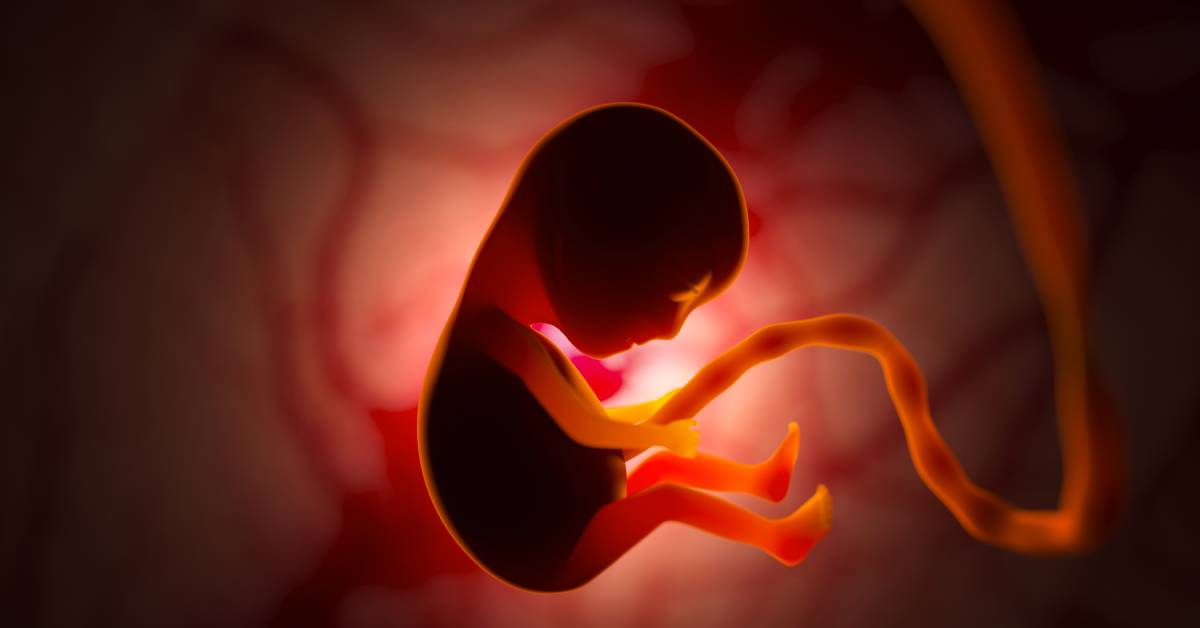
In the womb of our mother or in the womb of Mercy.
Safe in suspension, our nervous systems ever seek this feeling of complete and whole safety.
Within a psychological framework, this is mirrored through the unification with our mothers in the womb - the only time our nervous systems felt completely and utterly safe. All was well, all my needs were met, I knew no fear, nor pain, nor suffering. My only reality was the music of my mother’s heartbeat and the warmth of the water around me, suspended me in weightlessness. Equally, our nervous systems retain a memory of that experience and so seek to emulate that through our current relationships. However, humans, unlike the Divine, are flawed and equally needy. And so to feel absolutely satisfied and sustained in a relationship is, I think it’s safe to say, impossible.
However, I digress. Back to trust. Knowing that we are designed to seek the safety of unifying our bodies and souls with another individual, someone who sees us and loves us for who we are, how can we accept this love once it finally knocks on our door? How can we welcome it in with open arms and know that we won’t cast it away or reject it from fear of losing it? The answer is trust. To believe with full conviction that they won’t leave you, knowing that they might. It is the rejection of the awful reality and giving your full awareness, energy and focus to the reality where they don’t let you down. It is in believing that you are someone who is worth loving, that you are a worthy, loveable individual and maybe this person just happens to like what you have to offer. It is choosing to believe that love has finally found you, and you are safe to accept it and welcome it in.
The analogy that I provided my client was this:
To learn to trust someone is like realising that you are swimming in the ocean and have been caught in wild waves that both excite you and threaten to drown you. From fear, you begin to swim madly, fighting against each wave, trying to predict the patterns of what will come next and struggling against the current, becoming exhausted and frustrated with all the effort you exert, realising that you are getting nowhere. Then you try, just for a moment, to surrender to the water, lay back and let all your expectations, predictions and need to control the situation go, and just float atop the waves. You choose to trust that the water will not swallow you whole, though you still feel the terror that it will. That fear exists because there is a very real chance that a wave may come crashing down on you as you float and drown you, and there is also a chance it won't. That is the risk. That is the scary part of being in a relationship, for it is guaranteed that it will end, either through death or choice, for all things in life are temporary. And yes, it will devastate you when it happens, but how lovely to have floated on the waves and enjoyed the beauty of the sky, smelled the tangy saltiness of the ocean and listened to the melody of the waves, while you waited for the end. Trust affords you the joy of being present in the love while it is yours, enjoying every moment of it and accepting that the end will come, and you have made the most of the love while you had it. No regrets. Only love.

I fear that none of us will ever have that moment of "Ah, I am perfectly safe and content and happy here", because we will never be 100% certain that the ones who love us will not leave. And that is okay. Do not despair nor lose hope, and do not allow your mind to spiral and catastrophise that your feelings are indicative of never being able to find happiness. The more you practice trust, the easier it will become and the more you will find out just how beautiful the ocean can be.
Therapeutic Skill of the Week
This section will introduce one new skill each week that we have highlighted as a great practice to enrich your week with mental health benefits. This week, I would like to focus on singing and humming as a tool to regulate your nervous system.
Honestly, there is no end to how long I can talk about psychology, for it excites me so, but I promise to be brief and only give the necessary information about singing and humming (though there is SO much I want to say about it!).
It is incredibly regulating to sing or hum, as the vibrations stimulate the vagus nerve that sits adjacent to your vocal chords. That stimulation helps the nervous system shift from sympathetic arousal (fight/flight) to parasympathetic activation (rest/digest). We have culturally been using singing and melodies for healing for centuries. The first mental health hospital in recorded history was the Bimarestan of Baghdad (c. 705–715 CE) and it was recorded to use holistic approaches to healing psychological conditions, including music therapy. All cultures have collective songs, in church we sing hymns together, countries have a national anthem that you start the day with at school, in the pub everyone sings at the top of their lungs “COUNTRY ROOOAAADDDD, TAKE ME HOOOOOOMMEEE, TO THE PLAAAAACEEEE, I BELOOOOONNNGGGG.” It’s safe to say, whether we like it or not, singing works and that is why it has stuck around so long.
So I am challenging you to sing a new kind of song every day this week. Choose a happy song one day, a sad song the next, a fast song, a slow song, an emotional song, an uplifting song. Explore how the different melodies and words mingle with the feelings in your heart, and use it to process your emotions. For me, the song that always gets me is Mad World by Gary Jules. Oh my heart. And do I sing it? Heck yeah! That and Hallelujah, the Jeff Buckley version. I’d love for you to leave me a comment of your favourite songs to sing. I do hope the comment function is working, if not, then vibe the song over to me. I’ll do my best to receive it.
All my very best, with love and hope,
Tala