
Good Morning. My apologies I have been somewhat quiet here as of late. I must admit I have been distracted. My original intention was to write a post outlining the psychological benefits of fasting, and I may do that later on. For now, I feel I must, no I need to, talk about hope. How to find the light when the tunnel just keeps getting longer and longer. How to focus on the qualities within existence that give our hearts peace and calm, amidst a world that has caught fire, and is burning, burning, burning.
Some of you may already know about my Lebanese heritage, some of you may not. Some of you may already know my fondness for Iran, as there are people whom I love dearly from that country, some of you may not. Whether you know anything about either nation or not is irrelevant, but know this. So long as you and I have been alive, both nations have suffered in ways we, born in the west, could never conceive of living through.
By sheer random, stupid luck was I born in Australia and not Lebanon, because my parents decided to emigrate in the 90’s. Or as westerners like to call it, ‘expatriate’. I still don’t know why one is called immigration and the other expatriation, I suppose semantics of not wanting to be associated with the riff raff of those people? Who knows?
Though I was born here, I learned to love Lebanon and my heritage as a child growing up in the diaspora. Arabic was my first spoken language, my dancing style was belly dancing, my first sip of coffee was Turkish in those cute little cups we use, my food was all Mediterranean, all the time. I love my culture, my heritage, my language and my people. I always felt that keen sense of longing and yearning for a homeland I never knew, and I was never unaware of what my people were suffering through overseas, because you cannot know Lebanon without knowing its struggles.
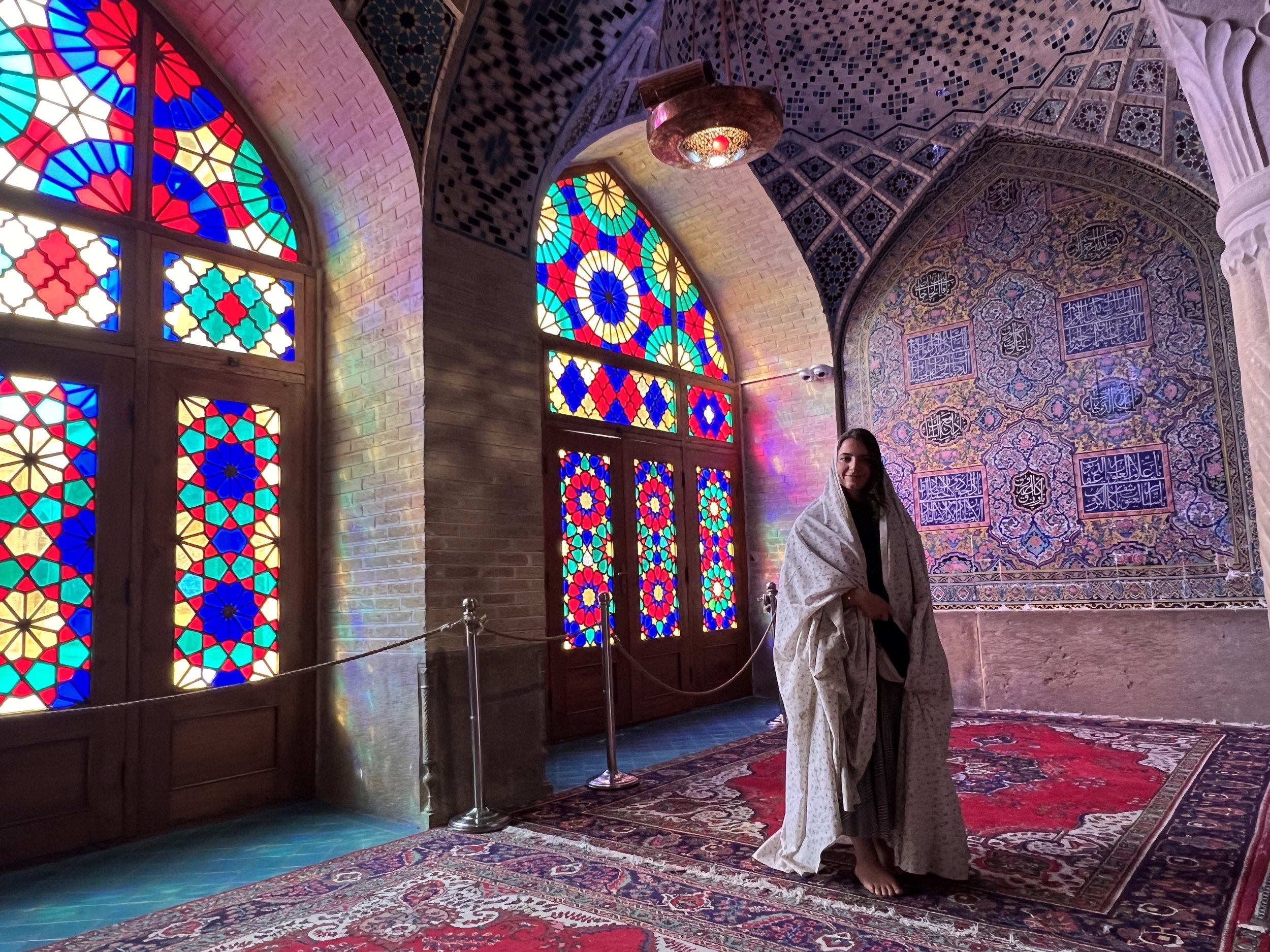
In Masjid Nasir Al Mulk - Shiraz, Iran (est. 1888)
Then, I was lucky enough to fall in love with a beautiful Iranian man. And he invited me into the world of Persian cuisine, music, culture, poetry and art, which I had never encountered before, and a special place opened in my heart for Iran and its people.
Just because in our lifetimes, our people and homelands have struggled, does not mean there have not been moments of complete beauty, joy and fulfilment for the people living there, or even for myself while visiting. I recall eating fresh kaak bi knafeh in the urban streets of Tripoli, Lebanon, early in the warm, summer mornings. Running around the pools with our family friend’s kids, all of us wonderfully tan, in the beautiful chalets of Beirut. Watching that burning Mediterranean sunset over the horizon, surrounded by all of my kinsfolk.
I recall listening to live Persian music in a hundreds year old Vakil Bazaar in the winding streets of Shiraz, while eating the most delicious faloodeh ice cream. Having my breath taken away again and again by every new palace we visited in Isfahan, wondering how they could have such incredible craftsmanship and mastery of art all those long years ago. Having tea with my Mamani and speaking broken farsi to her, in her ever warm, ever inviting home.
Life and beauty exists even in occupation, oppression or economic and political upheaval. I have been blessed to experience both sides, the beauty of our ancestral homelands, and feeling the privilege of being raised in the safety of a Western nation like beautiful Australia.
My focus on sharing these experiences is to challenge the phenomenon of ‘context inflation’ in psychology, which may be otherwise known as the experience of events being made to feel more psychologically intense, due to their contextual information, such as the emotional state you were in at the time, cultural perceptions, personal memory biases, worldview, social narratives and the overall group interpretation of an event. When you begin to challenge the contextual information, what you experience is a new perspective, one that may offer you some peace, relief and even, dare I say, hope.
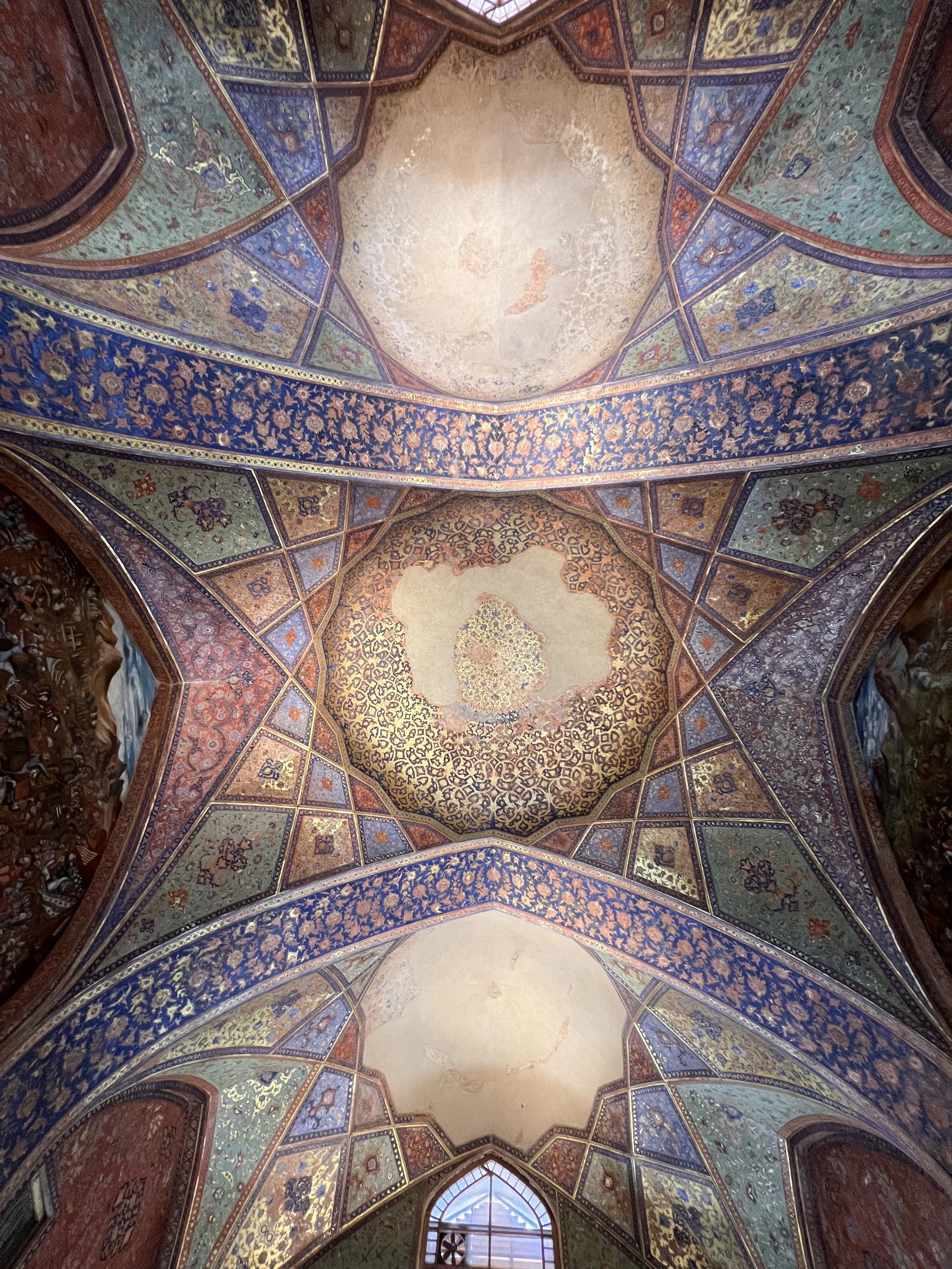
Chehel Sotoun Palace - Isfahan, Iran (est. 1647)
We cannot deny that the news and media agencies require a profit to operate. It has been found through very unfortunate (but important) research in media psychology that more inflammatory, negative and sensationalist headlines get more clicks, which boosts profit. It was also found that viewers were more likely to remember the content of the stories they viewed when they were more negative and generated more fear, likely because the nervous system enters fight-flight survival mode and is mapping the information as necessary information relevant for survival.
They also disproportionately cover the most extreme, rare and devastating events, creating an altered perception in the worldview of the every day person, that the world is constantly a tragic, horrible and painful place. They prey on our pre-existing negativity biases, which pull us toward threatening or negative information, as again, it may be useful for our survival, in the context of life-threatening events.
Hold these pieces of information in mind when you consciously engage with news stories, and what you begin to realise is that if we rely on a profit-driven company to determine our perceptions of world events and observing history unfolding before our very eyes, then we are unwittingly agreeing to be misled down a nihilistic, depressed and learned helplessness path where we feel stuck, perpetually triggered and fearful, every minute of every day.
However, if we start to expand our contexts - as in we challenge our own negativity biases, cultural perceptions, time-based settings and pull away from the way the stories are being framed by the news - we start to experience an expansion of our contexts, rather than an inflation. This naturally reduces the psychological intensity of our experiences.
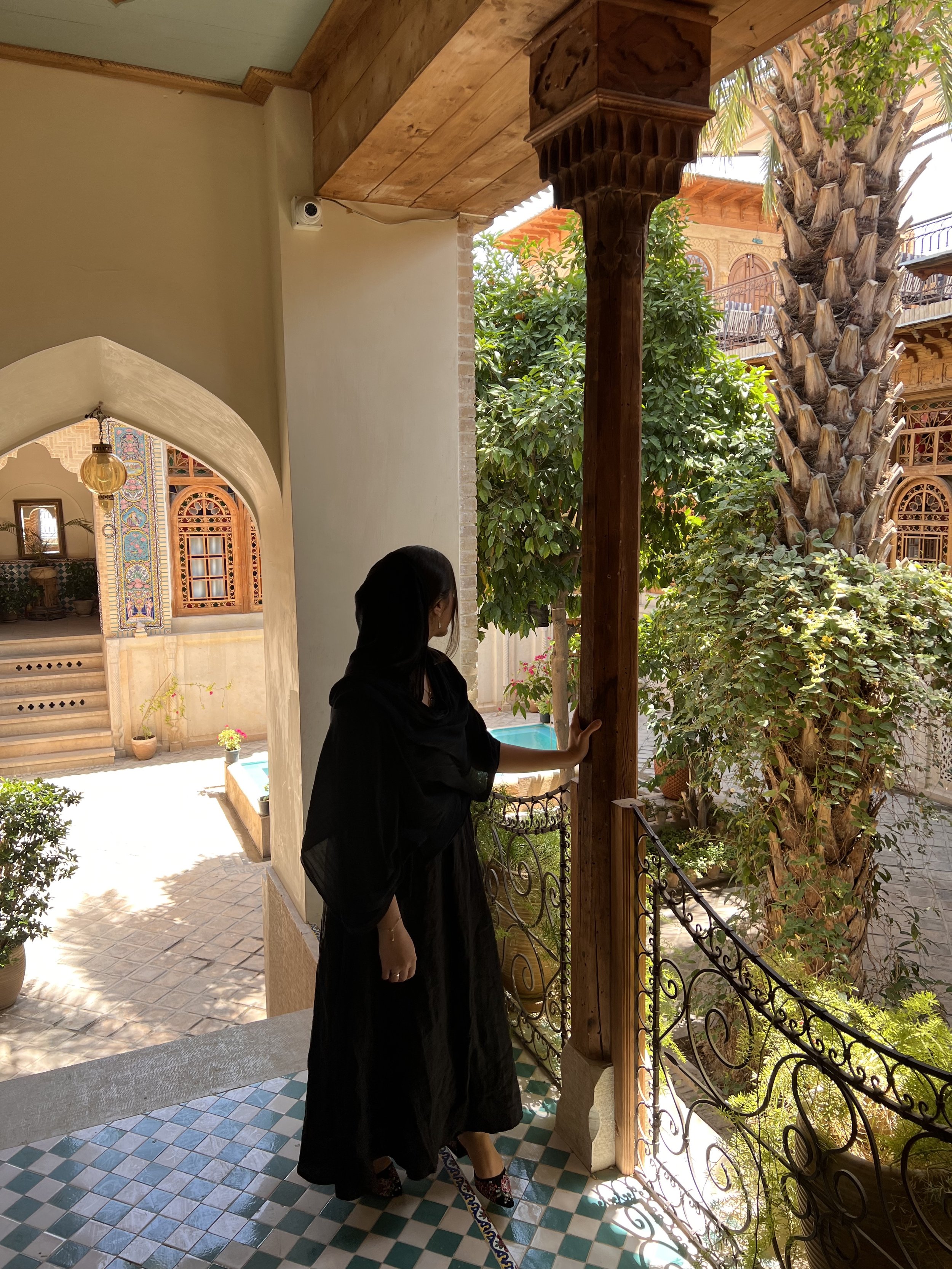
Iran Mehr Hotel - Shiraz, Iran (est. late 1700’s)
For example, did you know that Lebanon has recorded 14-15 major conquests and wars in the last 4000 years of its recorded history?
Egyptian domination of Canaan/Phoenicia (c. 1500–1200 BCE)
Neo-Assyrian Empire conquest (c. 9th–7th century BCE)
Neo-Babylonian Empire rule (c. 605–539 BCE)
Achaemenid Persian Empire rule (539–333 BCE)
Alexander the Great / Macedonian conquest (333 BCE)
Seleucid Empire control (c. 301–64 BCE)
Roman Empire annexation (64 BCE)
Byzantine Empire rule (395–636 CE)
Early Islamic conquests (Rashidun → Umayyad → Abbasid rule) (636–1099)
Crusades / Crusader states occupation (1099–1291)
Mamluk Sultanate rule (1291–1516)
Ottoman Empire rule (1516–1918)
France Mandate of Lebanon (1920–1943)
Syrian occupation of Lebanon (1976–2005)
Israeli occupation of southern Lebanon (1982–2000)
Iran has experienced about 10 major invasions in that approximate same recorded period of time.
Assyrian domination of parts of western Iran (c. 9th–7th century BCE)
Macedonian conquest by Alexander the Great (330 BCE) – fall of the Achaemenid Empire
Seleucid Greek rule (312–247 BCE)
Arab Muslim conquest of Persia (633–651 CE) – fall of the Sasanian Empire
Turkic dynasties and steppe invasions (Ghaznavids, Seljuks, 10th–12th centuries)
Mongol invasion and Ilkhanate rule (1219–1335)
Timurid conquest by Timur (late 1300s)
Afghan invasion ending the Safavid Empire (1722)
Anglo‑Soviet occupation of Iran during World War II (1941–1946)
Islamic dictatorship (1979–present)
Our countries are older than we are, older than we can even comprehend. They have suffered, been oppressed, even been destroyed and then rebuilt. They have created art, food, music, poetry, architecture, dance and an enduring way of life through culture, that has survived these thousands of years of oppression. Why, my sweet reader, do you believe now will be any different? Just because it is in your time? Are people not still holding loved ones and singing lullabies to children? Are people not still falling in love? Are musicians not still making music? Are poets not still writing their souls to the page, in their beautiful native tongue? Are artists not still creating art, born out of the pain and suffering?
I think to this quote I recently read from Andrei Tarkovsky:
“An artist never works under ideal conditions. If they existed, his work wouldn’t exist, for the artist doesn’t live in a vacuum. Some sort of pressure must exist. The artist exists because the world is not perfect. Art would be useless if the world were perfect, as man wouldn’t look for harmony but would simply live in it. Art is born out of an ill-designed world.”
These are dark times indeed, but when you reflect on the fact that life endures, no matter what oppressive force it is being challenged with, whether it is a destructive tsunami, or an invading regime, then suddenly you realise that perhaps life is not about moving in a simple, linear line of peace. Perhaps we are here to experience the depth of tragedy, to make art in the face of death and destruction, to love unapologetically when the world tries to make us cry. Hope, in this way, is a choice. I hope you choose it today.
Poetic Reflections
"It’s like in the great stories, Mr. Frodo.
The ones that really mattered.
Full of darkness, and danger, and sometimes you didn’t want to know the end…
because how could the end be happy?
But in the end, it’s only a passing thing, this shadow.
Even darkness must pass.
A new day will come, and when the sun shines, it will shine out the clearer.
So you keep going.
There’s some good in this world, Mr. Frodo… and it’s worth fighting for."
- Samwise Gamgee, The Two Towers
Therapeutic Skill of the Week
I usually guided my clients to do more natural based breathing, following their rhythms and focusing on extending the exhale, but there is a simple charm to the skill of box breathing (also called square breathing). I think adding the imagery of the four, clean lines of a square can be very stabilising to the mind. This evidence-based breathing technique can help you reduce stress, calm the nervous system, and improve focus.
You breathe in a 4-step pattern, like drawing the sides of a square or box. Each step is usually 4 seconds, but you can adjust if needed.
Inhale – Breathe in slowly through your nose for 4 seconds.
Hold – Keep your breath for 4 seconds.
Exhale – Breathe out slowly through your mouth for 4 seconds.
Hold – Pause with an empty lung for 4 seconds.
Repeat this cycle for 4–6 rounds or until you feel calm.
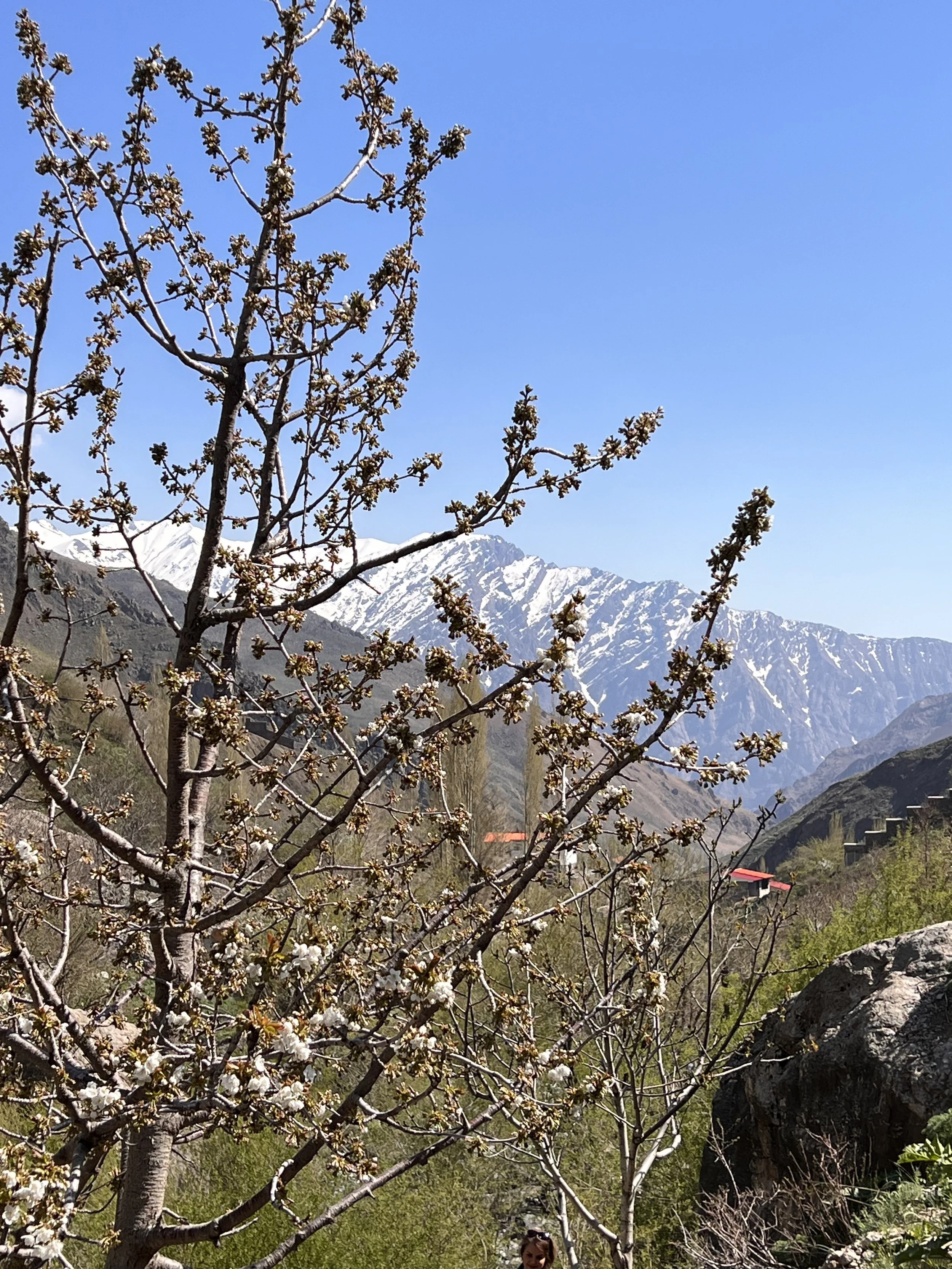
Mountains in the north of Iran
Thank you for reading this far, if you have. I believe it is unfortunate that in our time, we are to witness such hardships, but my final comfort is that I am almost 100% certain that our parents, grandparents, great grandparents, great great grandparents and so on and so forth, have all said the exact same sentence in their time as well. Rather than dwell on the circumstances out of our control, why don’t we focus on the things we can do, right now. Like:
Focus on making eye contact with that little child in the stroller and making a funny face, just to see them smile.
Help the old woman with her shopping bags.
When you eat dinner, think kindly to those who cannot afford or find a warm meal, and consider donating to charity organisations.
Pick up that piece of rubbish, to save someone from slipping on it later on.
Pay for the coffee of the stranger behind you in the line, just because.
Be the goodness you wish to see in the world, rather than wait for the world to be good enough for you to show up in.
Hold on to hope, it is your light at the end of the tunnel.
All my very best, with love and hope,
Tala